Categories
British International Tops

James McFadden – Scotland 05′

September 2005 saw Scotland overcome Norway in the hope of qualifying for the 2006 World Cup in Germany, but unfortunately it would be Norway that would progress to a second round with Italy gaining automatic qualification. During the qualification phase, McFadden would score twice in wins against Moldova and Slovenia.

In this game against Norway, Kenny Miller would score a first half brace with McFadden assisting the first with a headed flick before Miller poked it home. McFadden would be substituted in the 72nd minute for striker Craig Beattie after being booked earlier in the game. Norway would score their only goal of the game in the 89th minute with a drive from the edge of the box leaving a nervous Scotland team to finish the game.
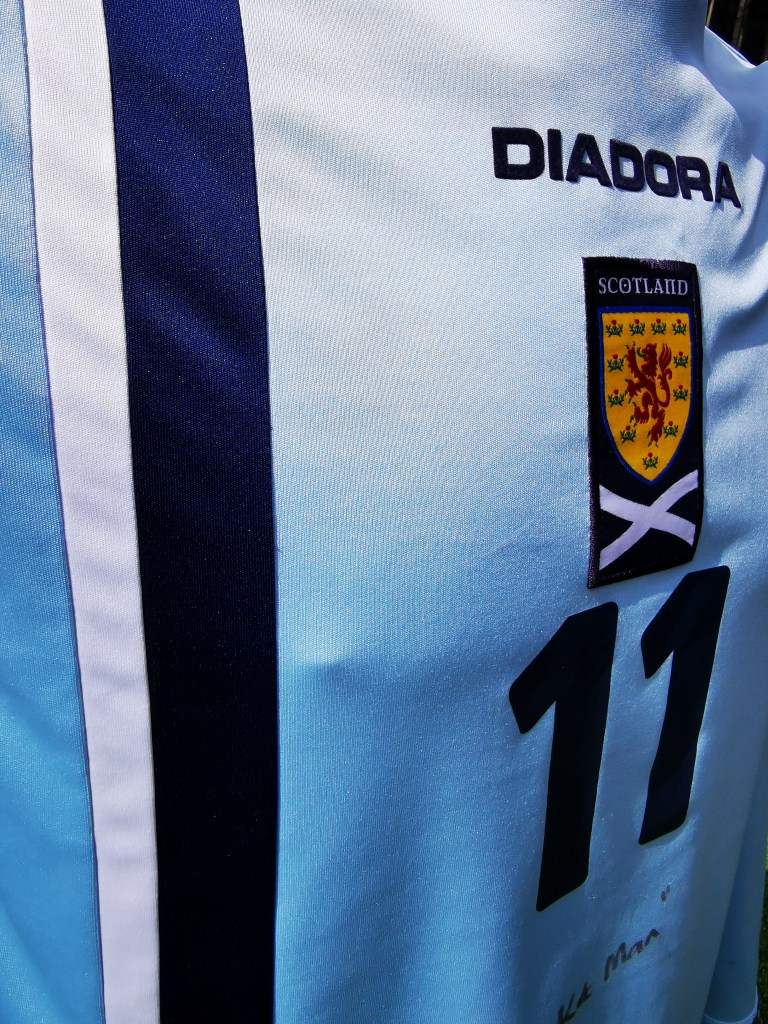
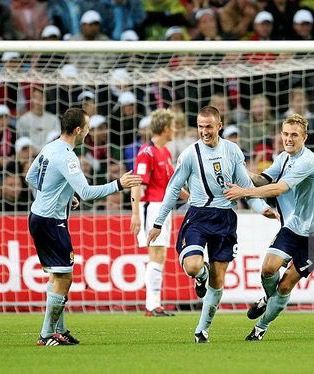
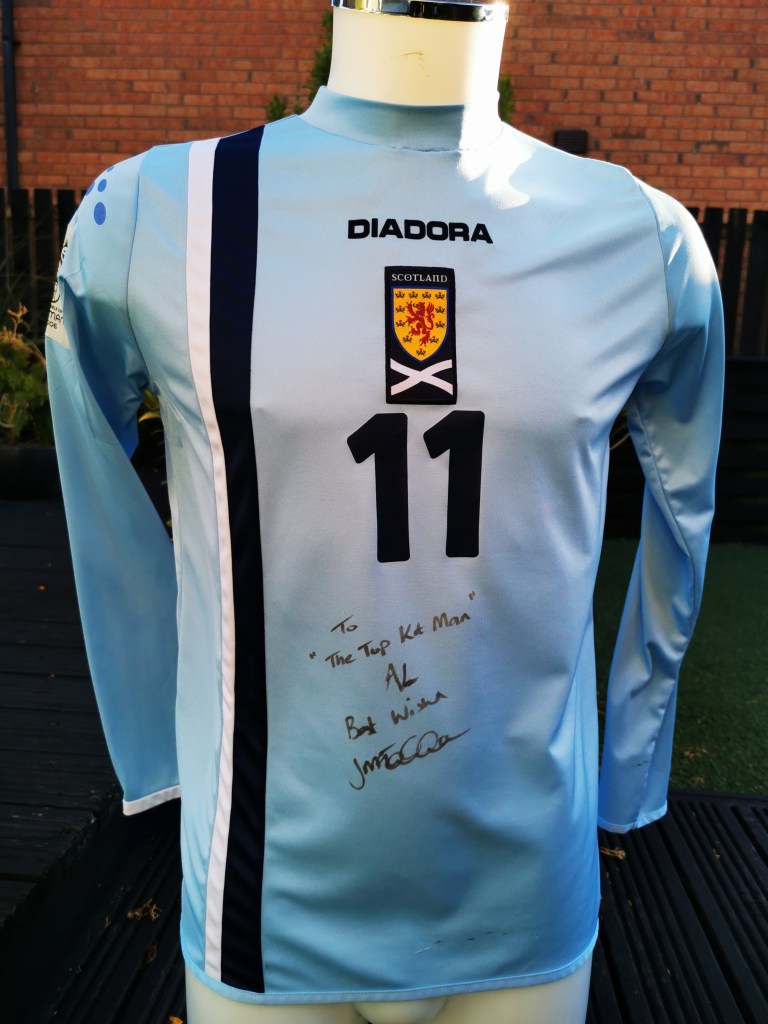
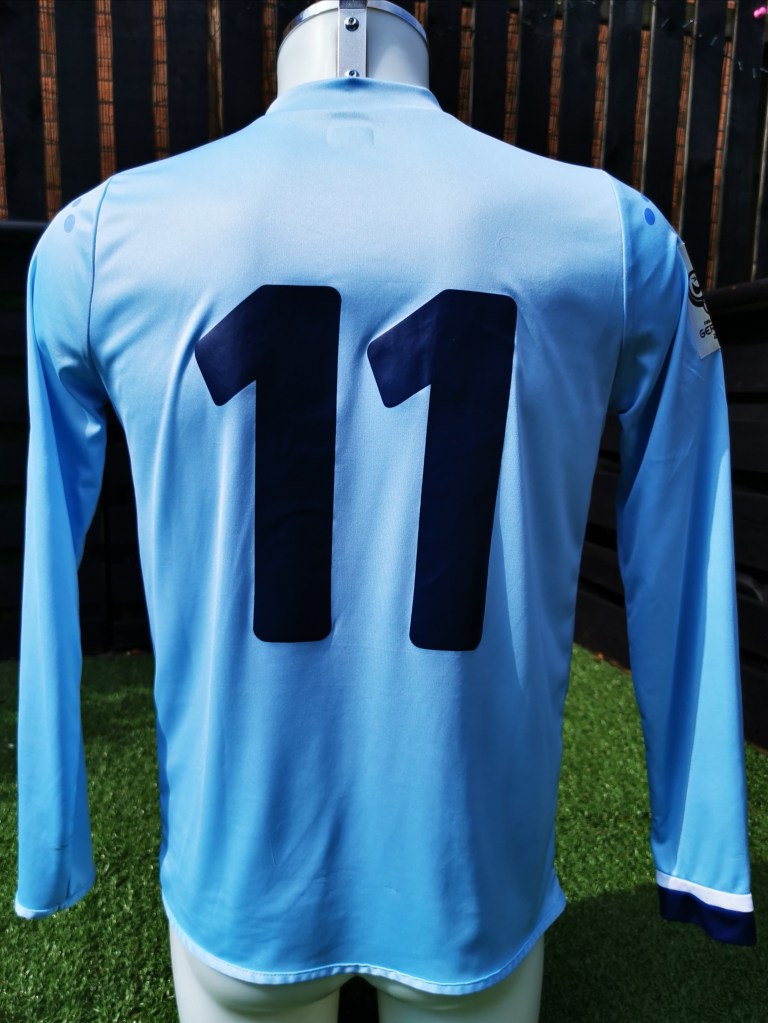
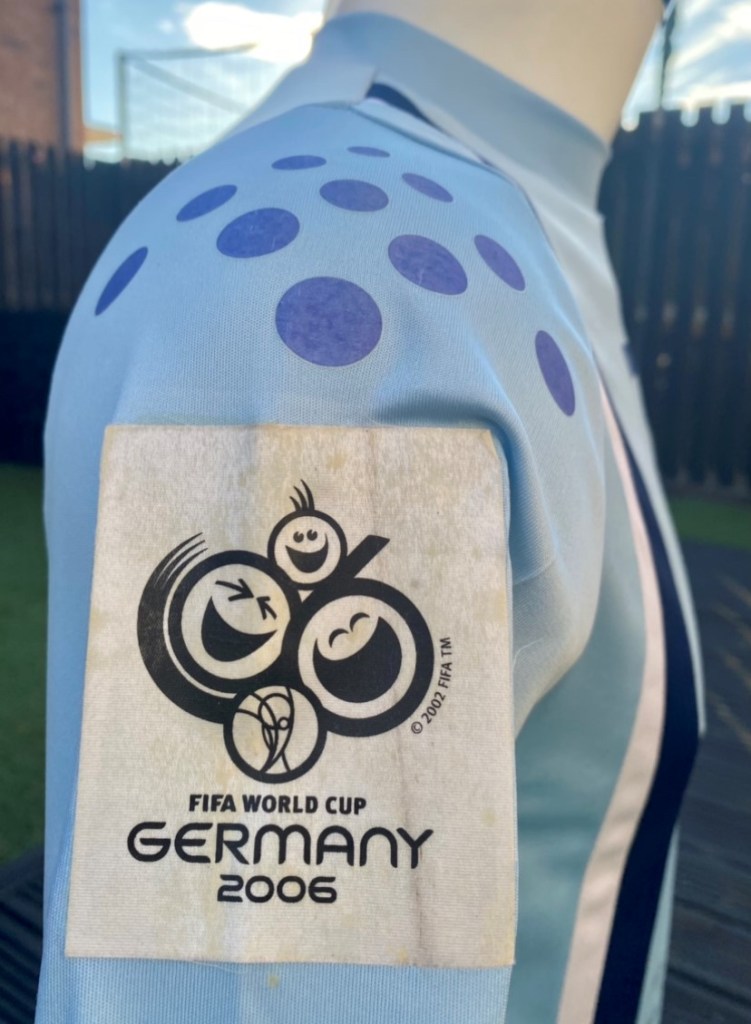
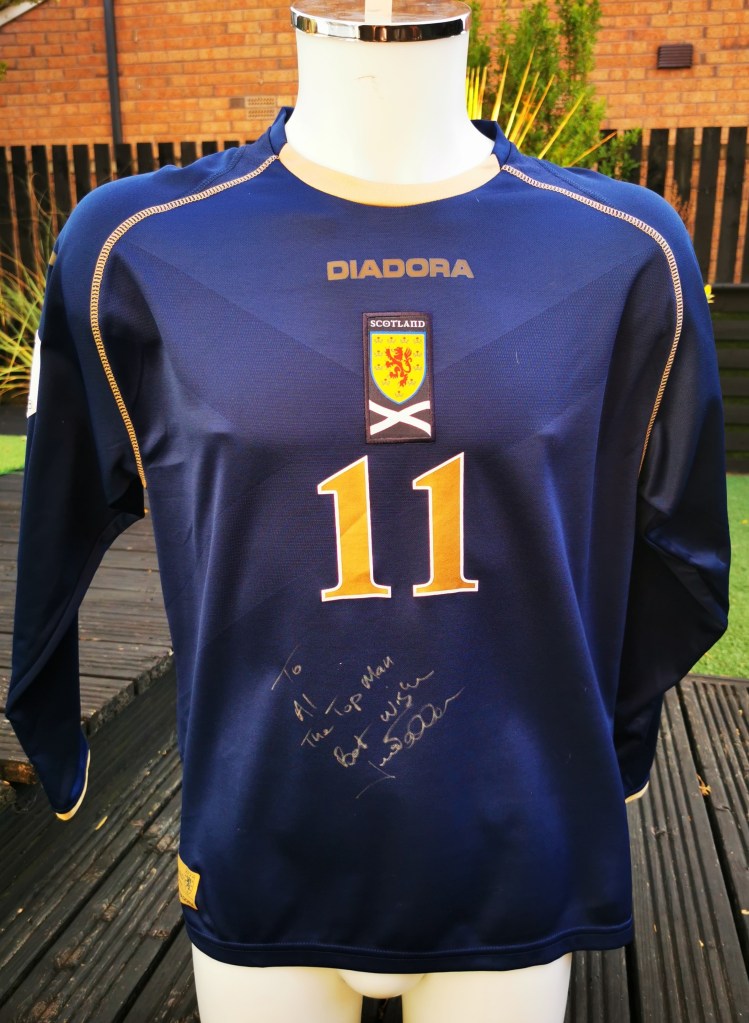
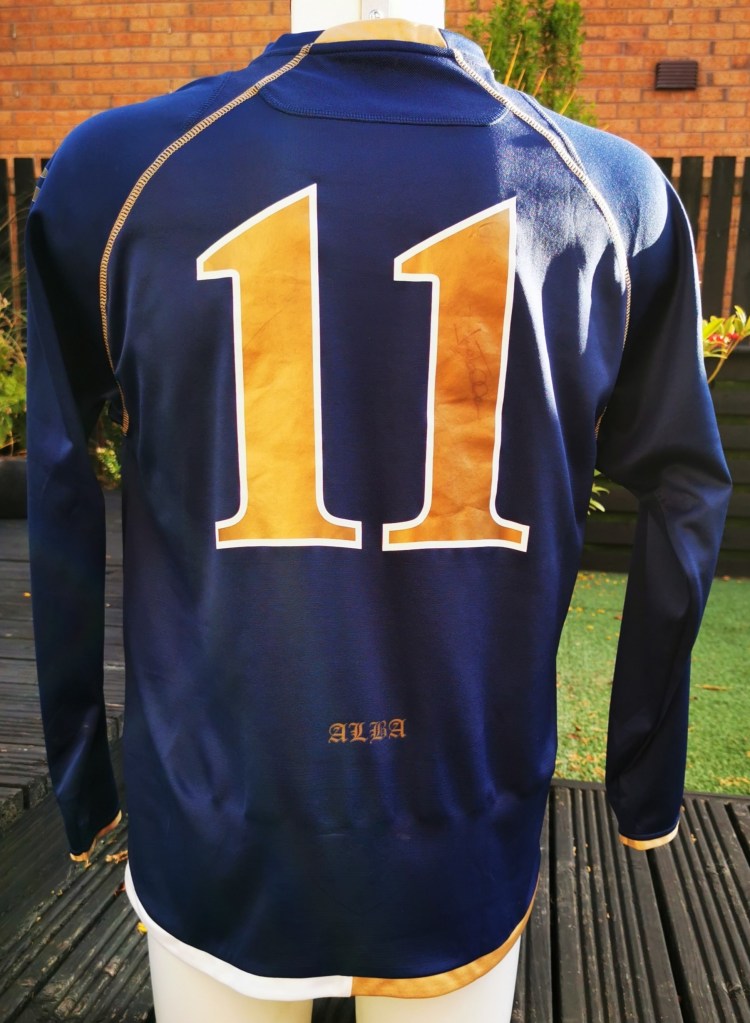
This Diadora jersey is simple but instantly recognisable as a Scotland top, mainly down to the colours used being light blue with a navy and white stripe. The spots on the top of the shoulder also matching the navy on the sleeve. The spots on the shoulder also changed colour as the players heated up during the game.
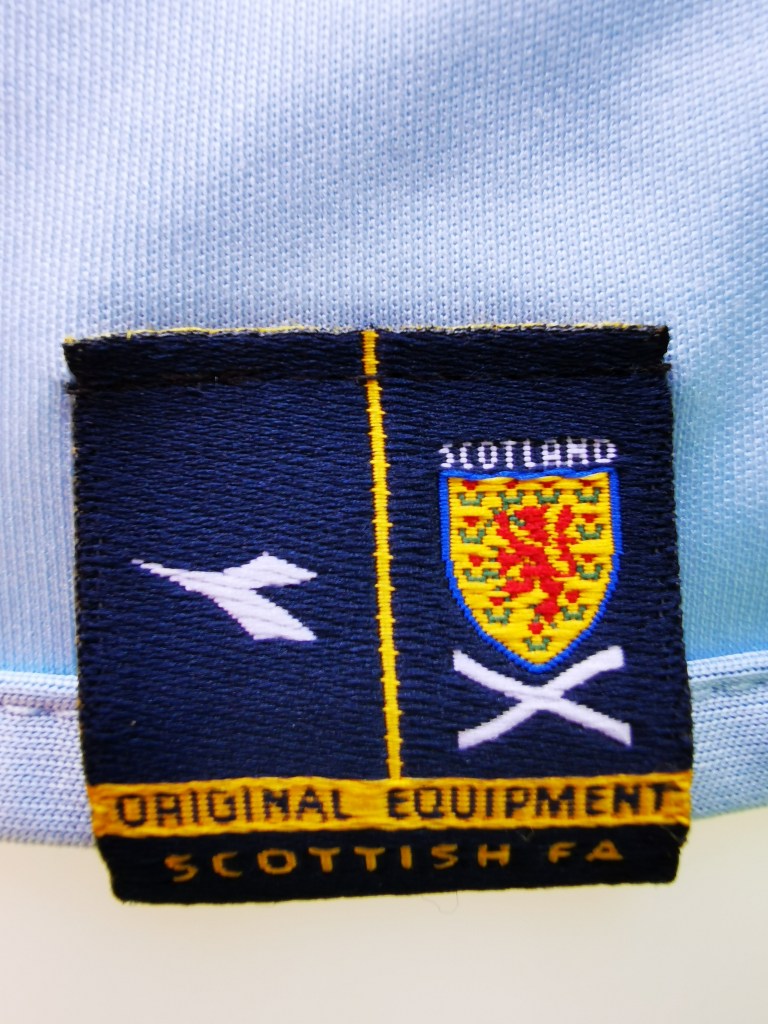
James would go on to play 48 times for Scotland over an eight year international career, with his first cap coming at the age of 19, against South Africa, while playing for his first club Motherwell. McFadden would become a regular in the Scotland set up scoring some vital goals, with the winner in both 1-0 wins over the Netherlands and France being his most notable.

After his retirement, James would become a coach for the national side where he would work under Alex McLeish from 2018 to 2019.
Categories
British International Tops

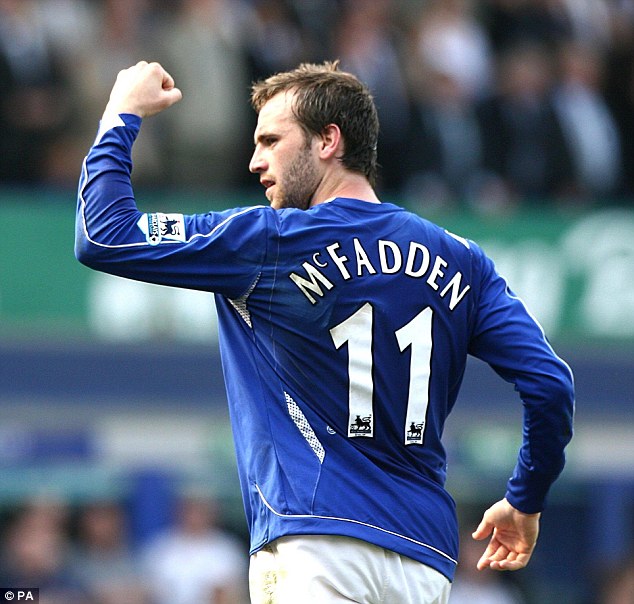
James McFadden – Scotland 06′

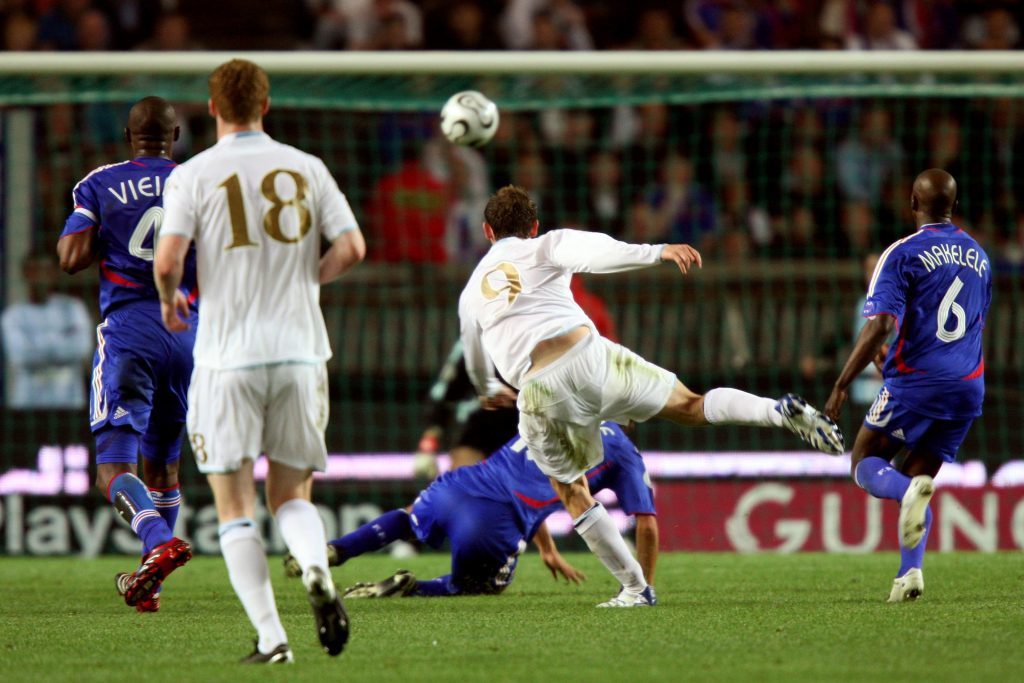
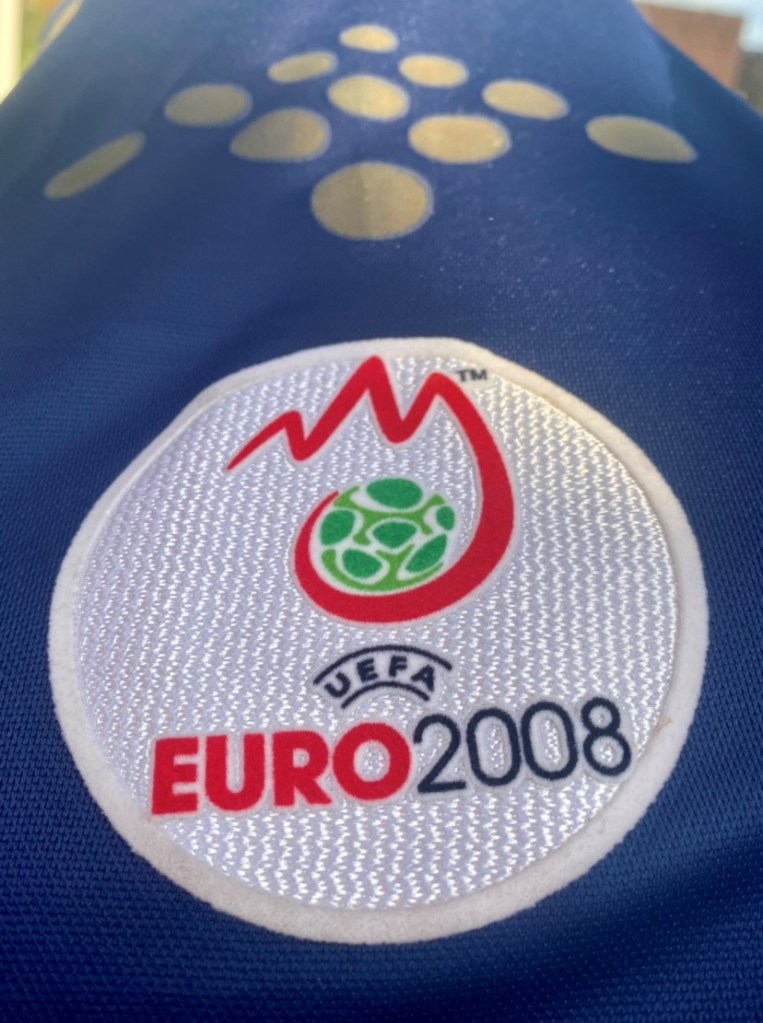
Qualifying for Euro 2008 was a hard ask for Scotland as they were placed in Group B with the previous World Cup champions Italy and the runners up France. With a few shock results coming Scotland’s way, beating France home and away, qualification was looking possible but due to disappointing results against Ukraine and Georgia, Scotland would make it 10 years since qualifying for a major tournament. Even though there was heartache for Scotland, Faddy would score four during the qualification phase with his legacy being cemented with his long range strike in Paris that would give Scotland a 1-0 win over France.  
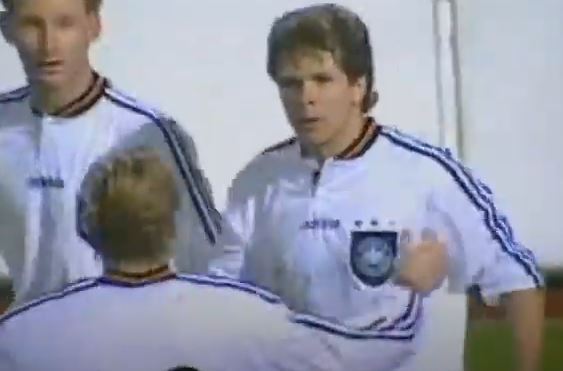
Credit – VIDEO: It’s 10 years to the day since Scotland beat France in Paris thanks to THAT James McFadden goal – The Sunday Post

This top was worn by James in September 2006 where he would play just the twenty minutes before having to depart the pitch due to injury, with current Motherwell manager Graeme Alexander coming off the bench. Scotland would still win the game 2-1, helping their early qualification hopes.

When Scotland played Lithuania back at home in Glasgow, McFadden would score a superb goal that secured a 3-1 win after a quick throw in was taken from the right, Kris Boyd would lay it off at the edge of the box and after three touches McFadden would have the keeper picking the ball out the back of the net. 

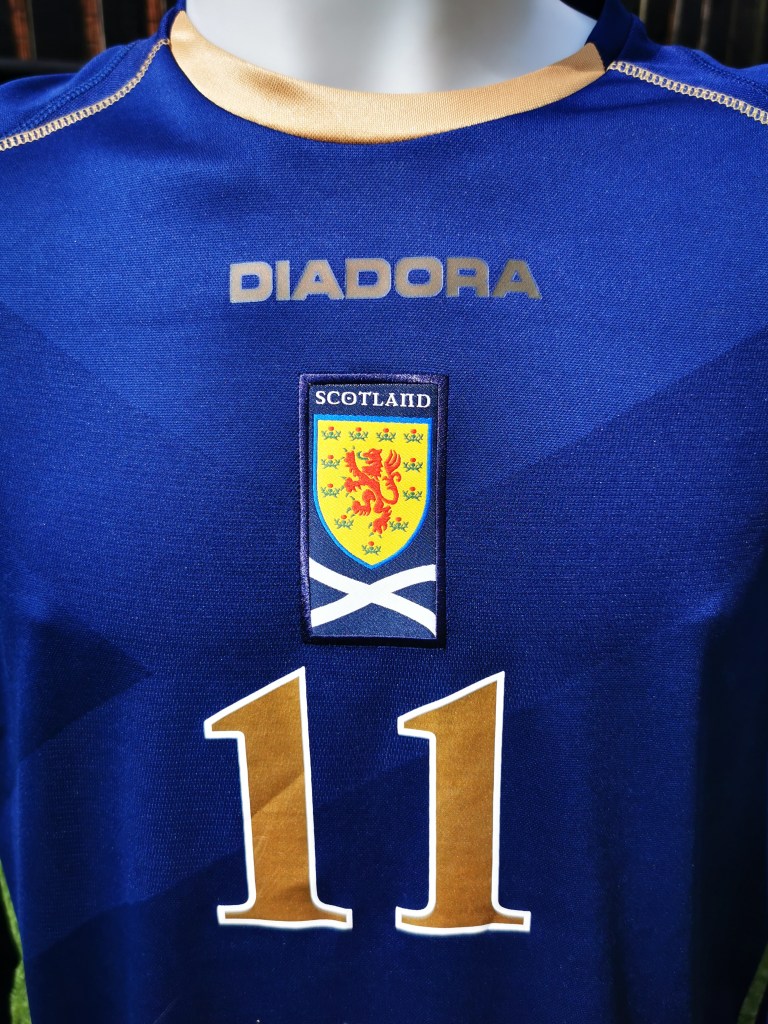
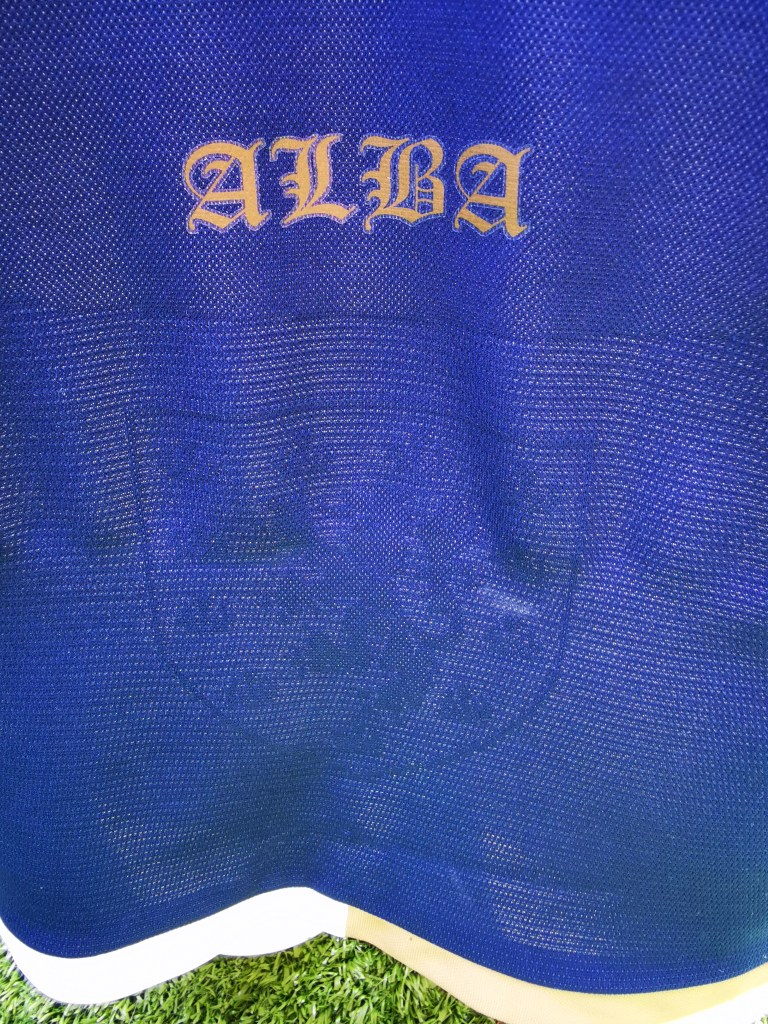
Looking at this top from a distance, it is quite ordinary but seeing it up close you will find some hidden gems from Diadora, as on the front there is a darker saltire on the chest but also the word alba on the bottom of the back with a lion rampant underneath. The word alba is the Scottish-Gaelic term for Scotland first used in ancient Greek and Latin texts meaning ‘Albion’ to refer to Britain as a whole.

Categories
British Club Tops

Nick Cusack – Motherwell 91′

On the 3rd of April 1991, Motherwell would play Celtic in front of 41,000 fans at Hampden Park. The result of this match would end disappointingly for both teams as none of them would manage a single goal the closest effort being a 90th minute free kick by Ian Ferguson which crashed off the post.

This would mean a replay would have to take place on the 9th of April. The second leg would be a lot more entertaining for the 31,000 fans that made the trip back to Hampden on a very wet and windy evening, as they got to witness a six-goal thriller, as Motherwell overcame the Bhoys 4-2.

Celtic would take the lead due to an unfortunate own goal by Tom Boyd as a corner played into the box caused havoc and eventually bounced off Boyd and ended up in the back of the net. A quick reply from Dougie Arnott would see the Steelmen bounce back level but it would not be for long as another set piece error would give Anton Rogan his second goal of the season while leaving Motherwell 2-1 down going into the second half.

(Cusack, right, celebrating after the game)

At the start of the second half, a ball forward from Luc Nijholt found Dougie Arnott in the box and his perfectly executed header found the back of the net for his second goal of the game to get Motherwell back on level terms. Things would soon get better for The Well as an unbelievable thunderbolt from Colin O’Neill would see Motherwell take the lead for the first time in the tie. To rub salt into the wounds of the Celtic players, Stevie Kirk would score an audacious chip that would land perfectly into the top right-hand corner.

(O’Neill ,no. 4. celebrating his screamer) Credit for both match pictures –
https://www.bing.com/videos/search?q=motherwell+celtic+4-2+1991&docid=608054175345561692&mid=28D753BDA67A030AFA2E28D753BDA67A030AFA2E&view=detail&FORM=VIRE

Dougie Arnott would be named man of the match as only one game would separate Motherwell from a much-needed trophy and as many Motherwell fans would tell you, the rest is history.

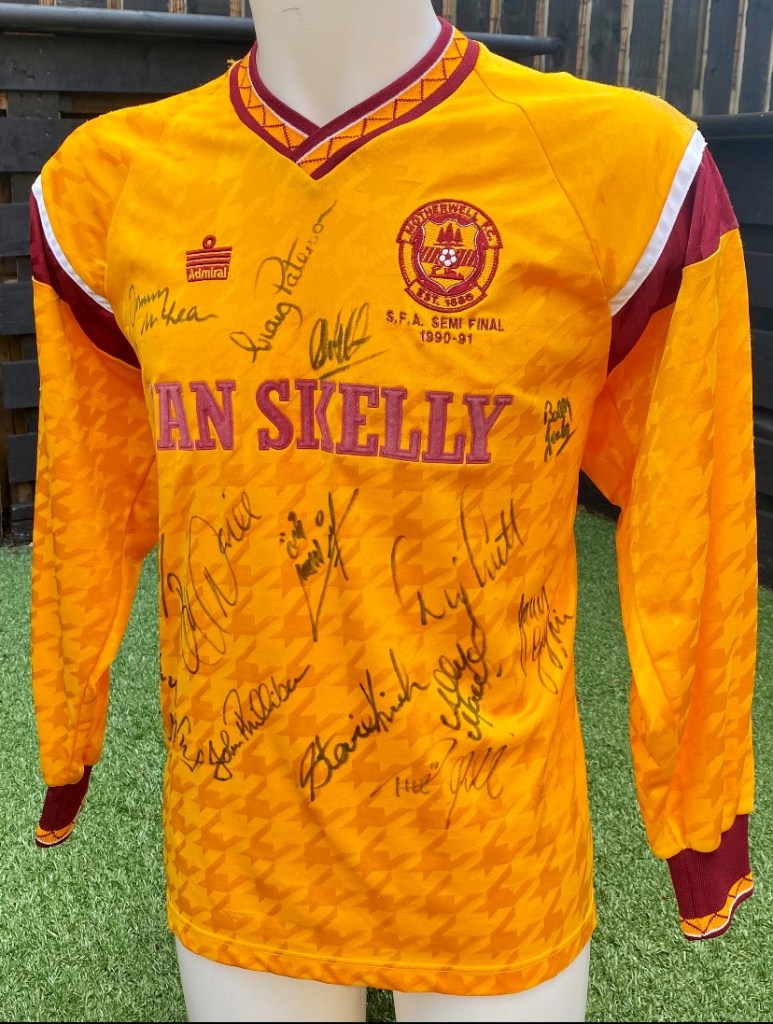
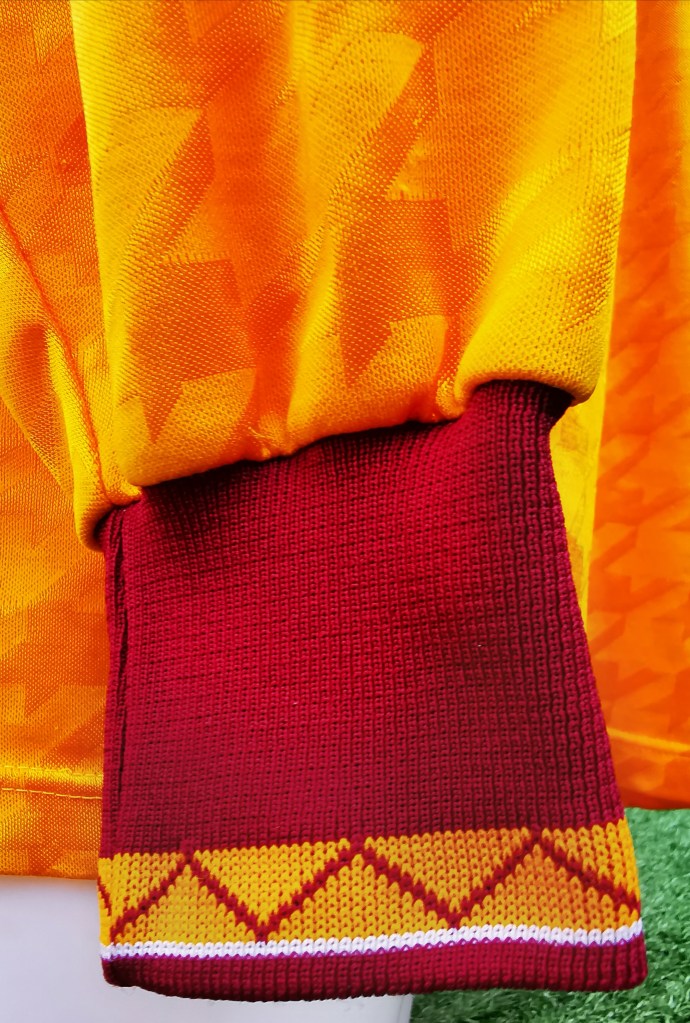
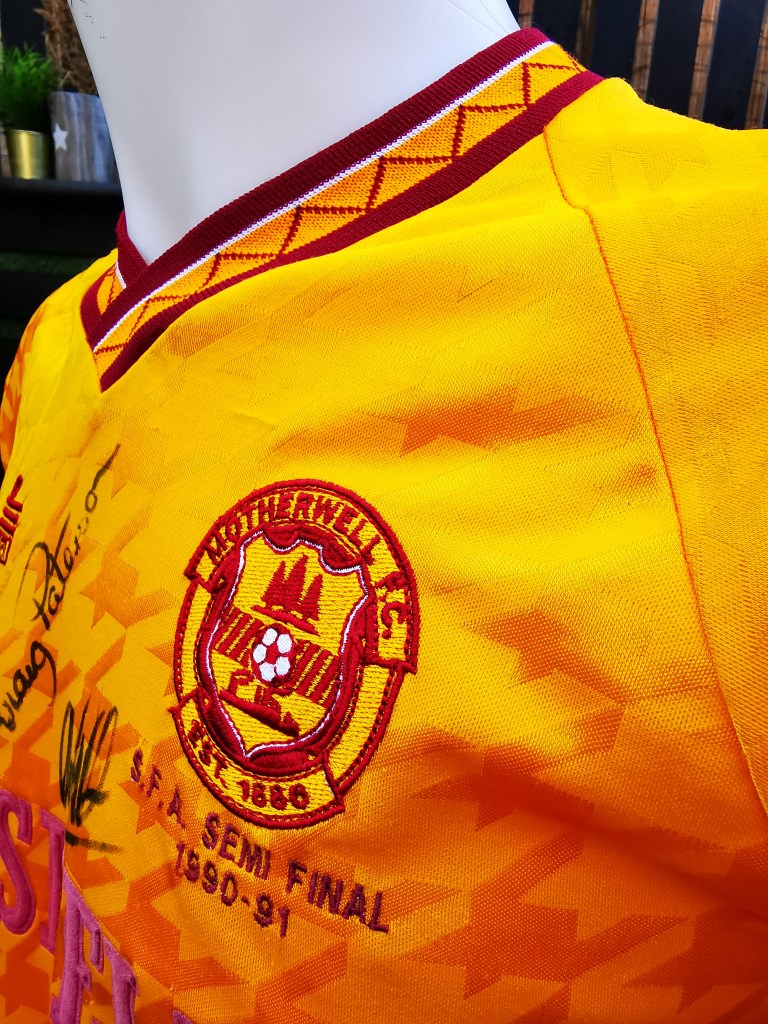
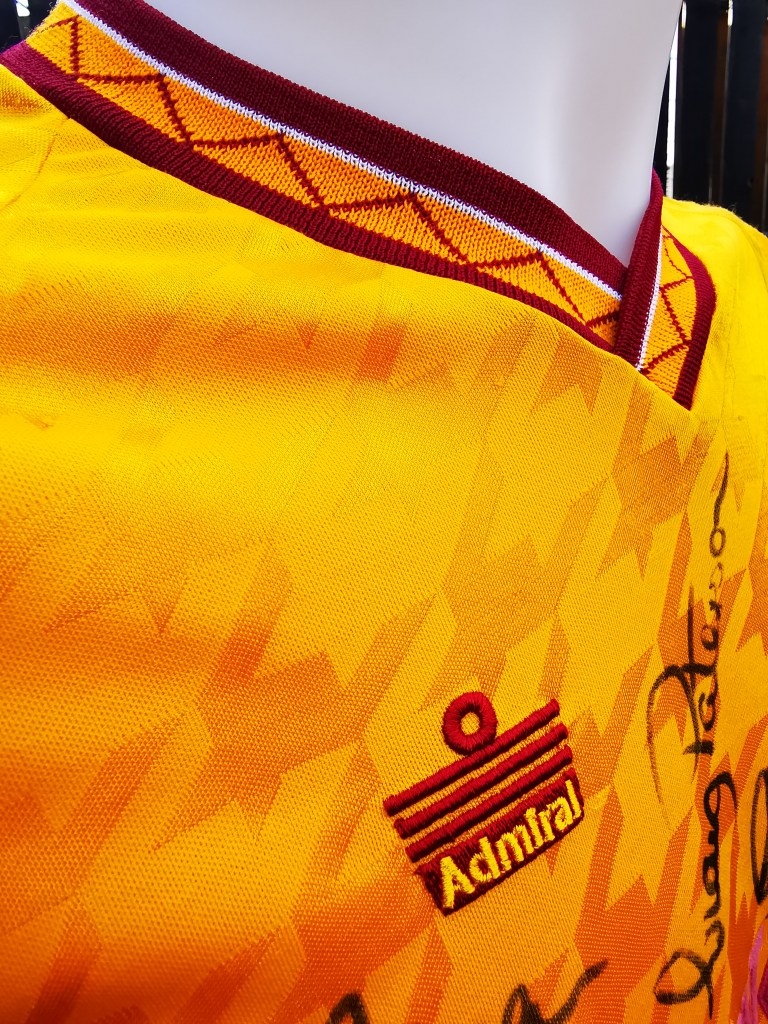
Now onto the jersey. Admiral have produced a fans favourite jersey here as not only is it memorable for being a Scottish cup winning jersey but it is also an instant classic due to the pattern moving around the collar to the white and claret stripes breaking up the torso from the sleeves. The darker amber pattern running through the top gives the top depth and helps it shine in the sun which makes it a stunning top.

One thing that makes Motherwell tops so unique is the colours, claret and amber, which they have been using since 1913 as only a handful of teams surprisingly use, with AS Roma and Bradford City AFC being the most notable few.

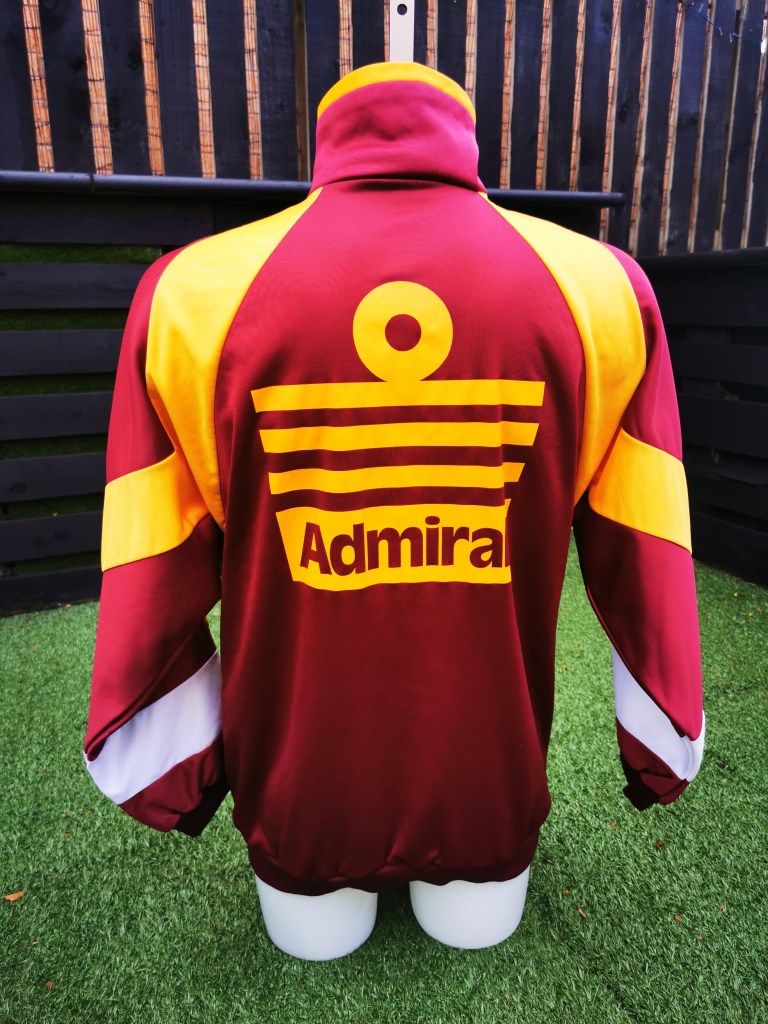
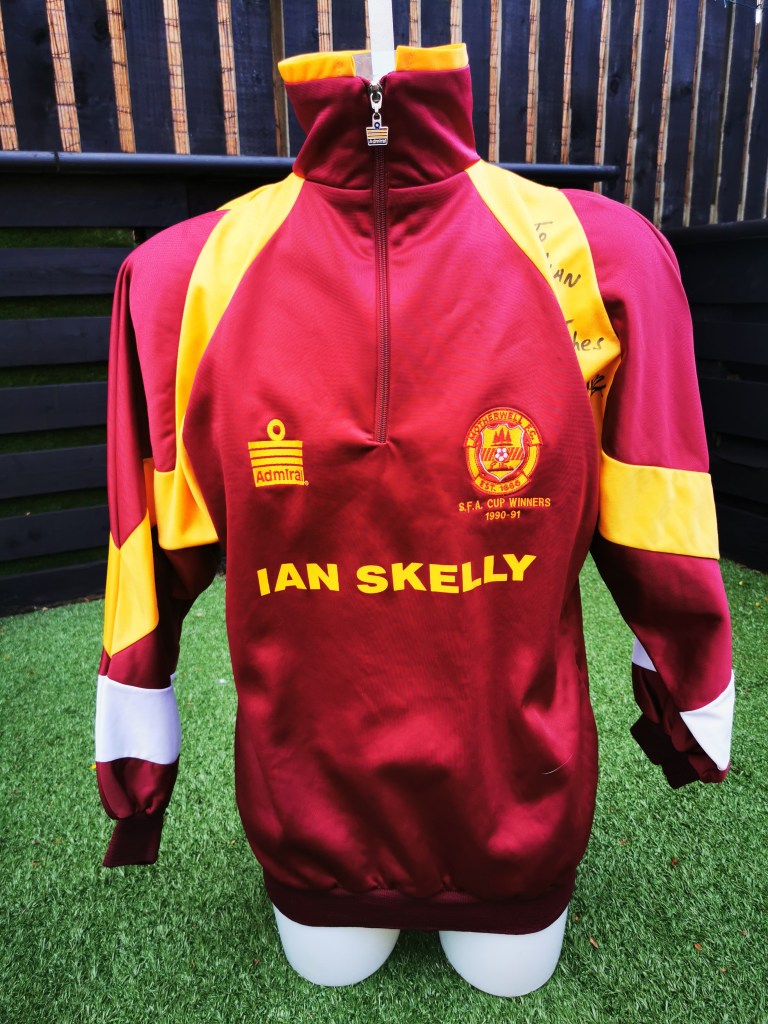
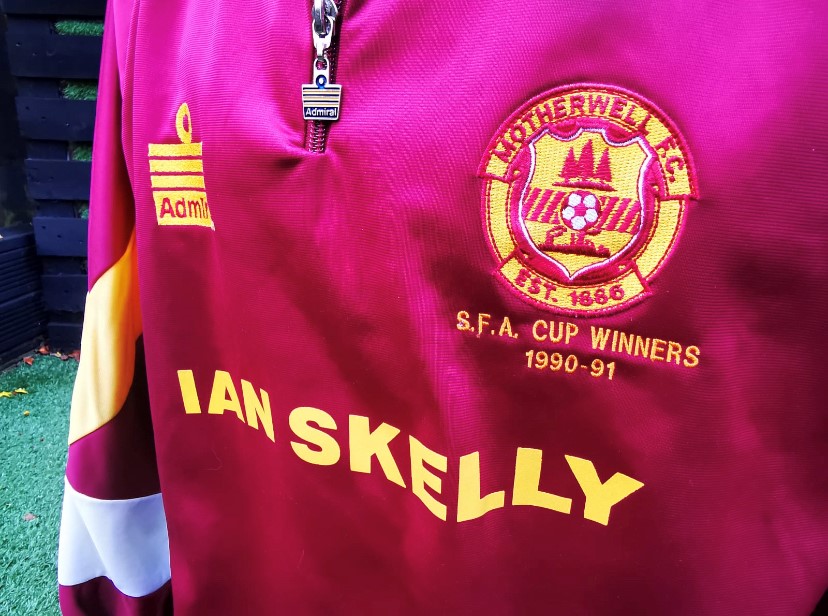
This warm up top was first showcased as Motherwell lifted the Scottish Cup at the end of the 90-91 season and would be used throughout the well’s 91-92 campaign featuring the S.F.A. Cup Winners embroidery along with Admiral branding on the front, back and zip.


Categories
British International Tops

Joey Jones – Wales 76′

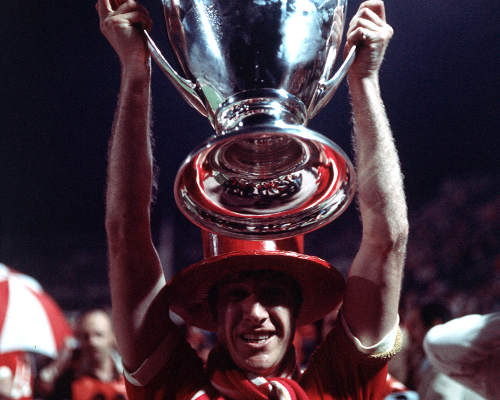
Winner of the English First Division, a UEFA Cup and two European Cups, Welsh full back Joey Jones won it all at club level over a three-year spell with Liverpool but that is not where it started for Jones. At the age of seventeen Joey would start his career in Wales with Wrexham AFC where he would play just under one hundred games during his first spell at the club. It was also at Wrexham where Jones would win his first piece of silverware, the Welsh Cup in 1974-75.

Credit –
https://www.liverpoolfc.com/news/announcements/264257-rome-1977-through-the-eyes-of-the-11-reds-heroes

After becoming a success at Liverpool, Jones would return to Wrexham for a second stint and later would retire at Wrexham after a third spell at the club. In between his second and third spell in Wales, Joey would play for Chelsea from 1982-85, where he would win the English Second division in 1983-84, and played for Huddersfield Town from 1985-87.

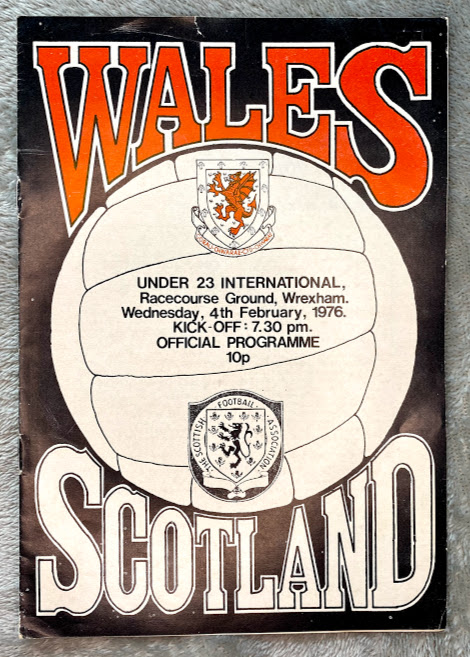
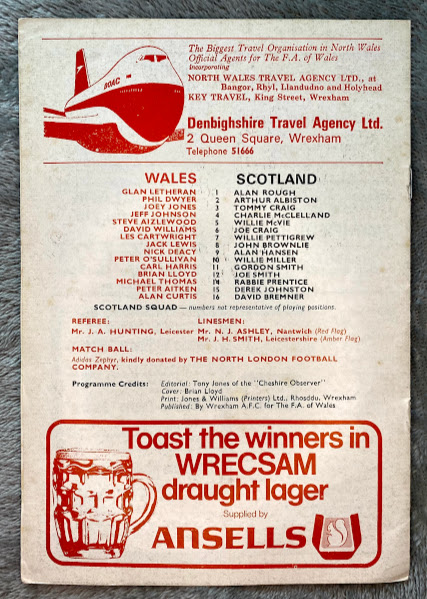
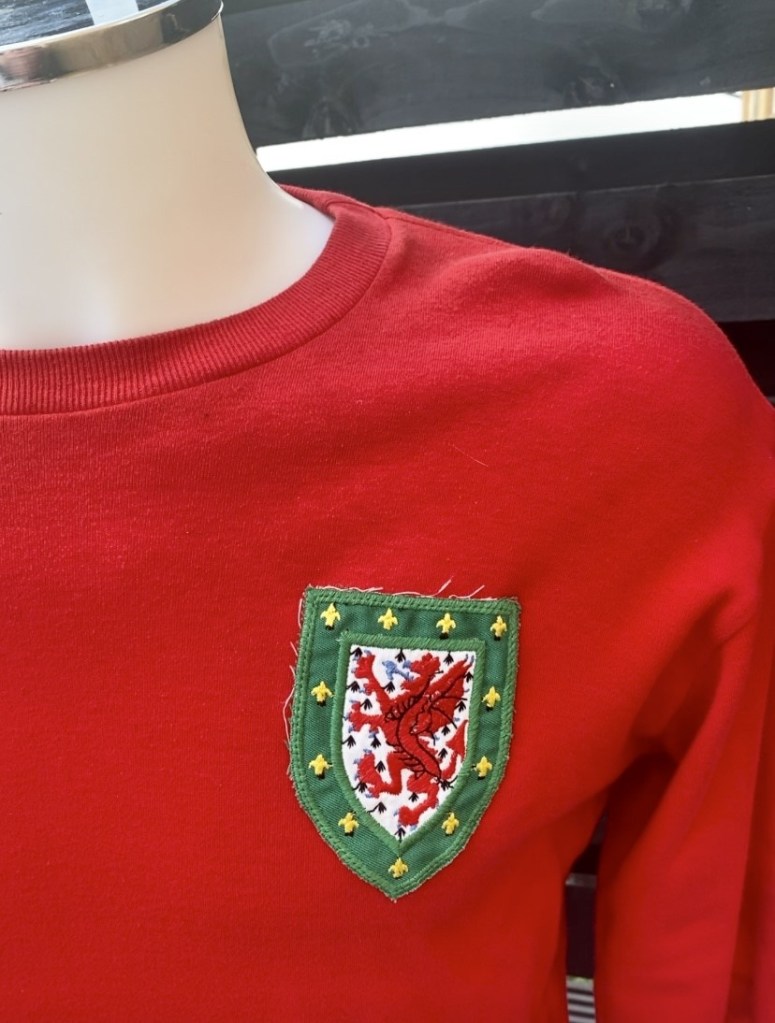
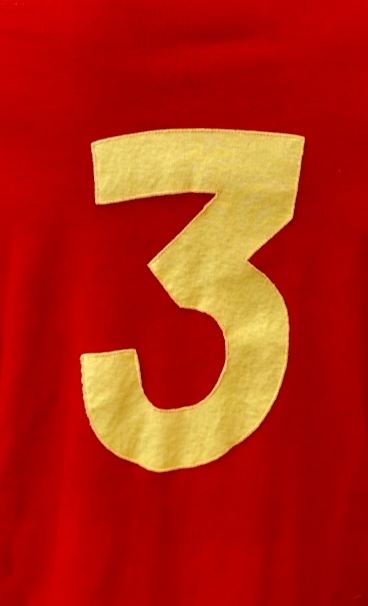
Joey Jones would play for the Wales first team for over a decade, winning a total of seventy-two caps and scoring just the one goal which would come in 1982 in a 4-4 draw with Yugoslavia. The jersey we are looking at here is from a Wales versus Scotland Under 23’s game in Wrexham where Joey would be placed up against Liverpool teammate and Scotland international Alan Hansen. This jersey was swapped with Willie Pettigrew after the match which Scotland won by 3 goals to 2, with the Scotland goals coming from Willie Pettigrew (2) and Tommy Craig.

The top is all red to match the colour of the Welsh Dragon on the badge which uses a green border to follow the colours in the national flag. The yellow number on the back also matches the Admiral brand sponsor. This top is identical to Wales previous two home kits apart from the brand changing from Umbro to Bukta and then to Admiral, where the top was only worn twice with Admiral wanting to hold off the release of their new home kit until the Wales first team were playing. Admiral would move from this jersey to the famous Wales tramline Admiral top with the branding on the collar, as shown above.


2 5 7 9 10 11 14 1970's 1990's 2000's Adidas Admiral Australia Black Blue Borussia Dortmund Celtic Chelsea Claret and Amber Diadora England English European Everton Germany Green International Italian Liverpool Macron Motherwell Nike Orange Pony Puma Purple Rangers Red Scotland Scottish Umbro Wales White Xara Yellow

Categories
European International Tops

Jan Everse – Netherlands 76′

Not a common household name, Jan Everse was a left back for Holland who spent all his days in his home country playing for Feyenoord between 1972 – 1977 and Ajax between 1977 – 1980. Everse only played for eight years before being forced into retirement. However, during this short career Jan managed to be called up to both Holland under 23’s and then the Holland national team, winning two caps against Belgium and Yugoslavia.

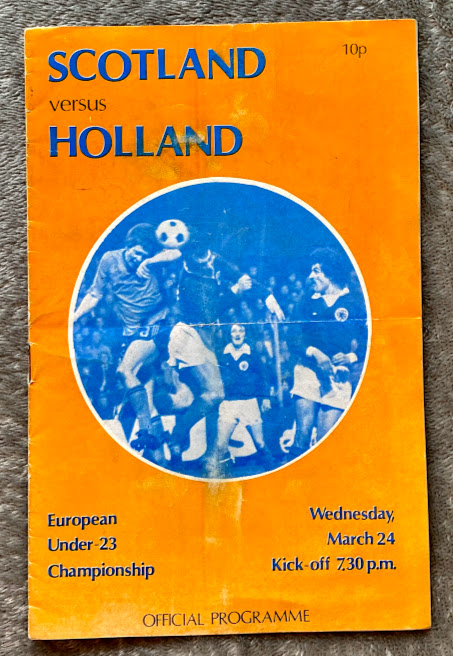
This top comes from Scotland versus Holland during the European Under-23 Championships in March 1976 where the match was played out in front of an incredible crowd of 32,593 at Easter Road. This Scotland team consisted of players such as Joe Jordan of Leeds United, Derek Johnstone of Rangers and Willie Pettigrew of Motherwell, who would go on to swap jerseys with Jan after the game.

Having won the first leg 2-0, Holland would lose this game 2-0 with goals coming from Derek Johnstone and Colin Jackson. taking the game to extra time and eventually penalties where the dutch would succeed and take their place in the next round of the tournament. The Dutch would soon feel the same heartbreak as the Scots as they were beaten in the semi-final by the eventual winners, the Solviet Union.

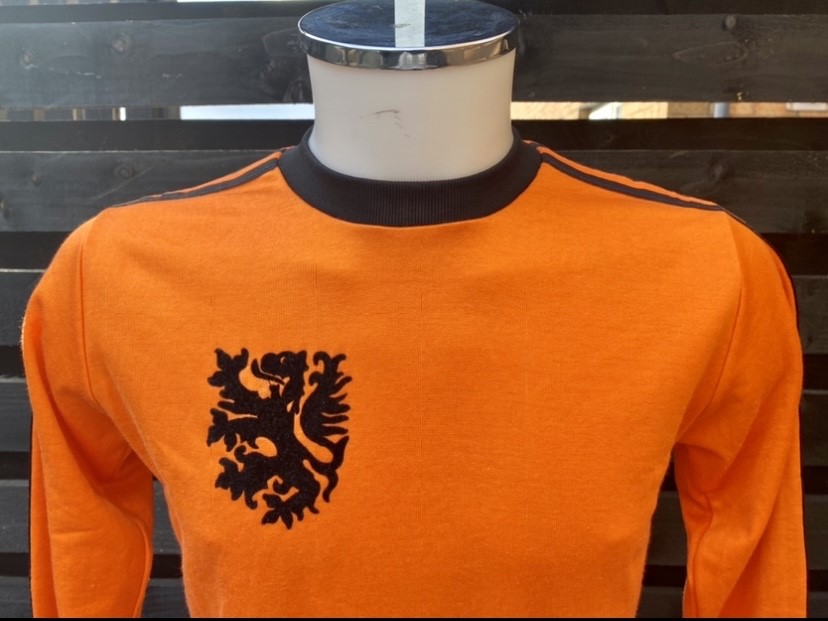
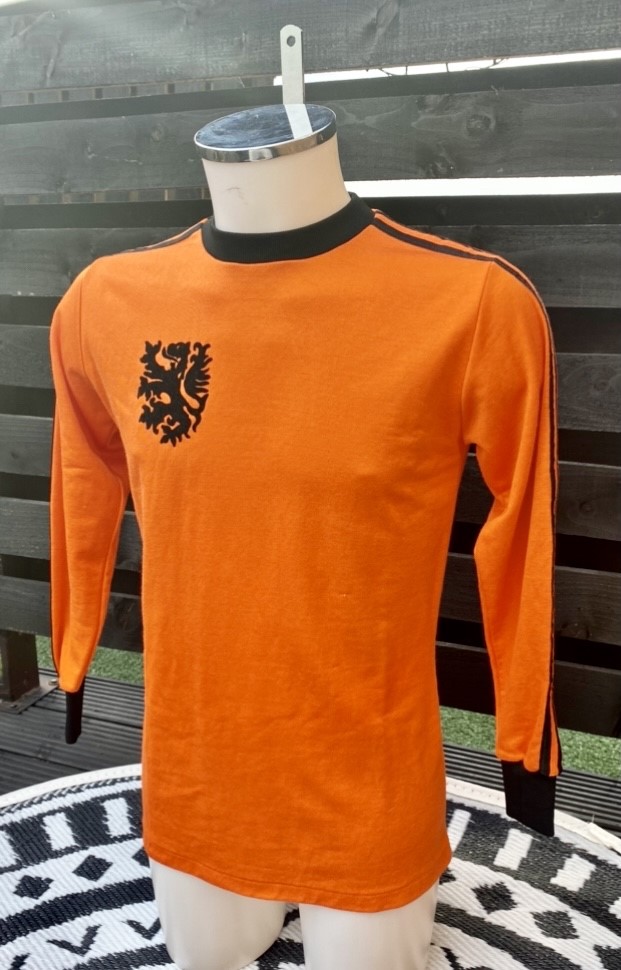
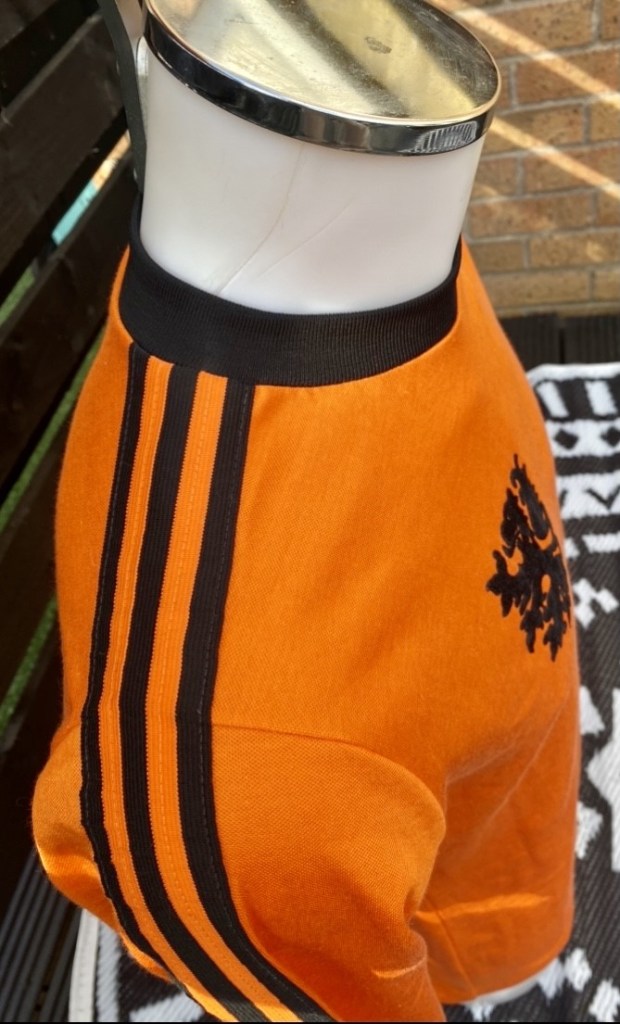
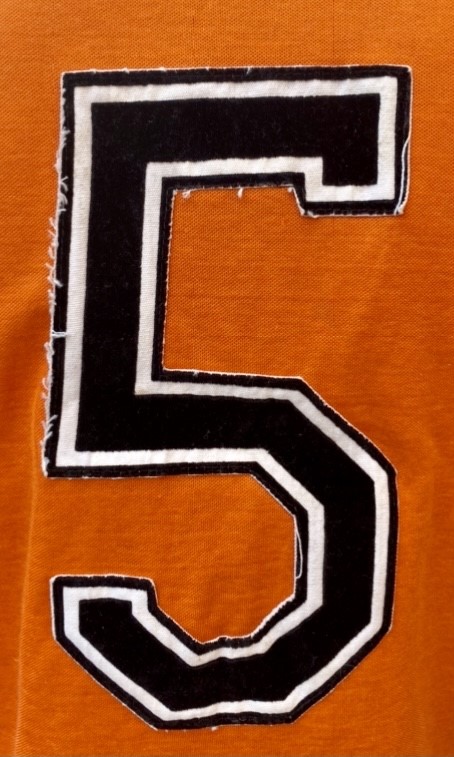
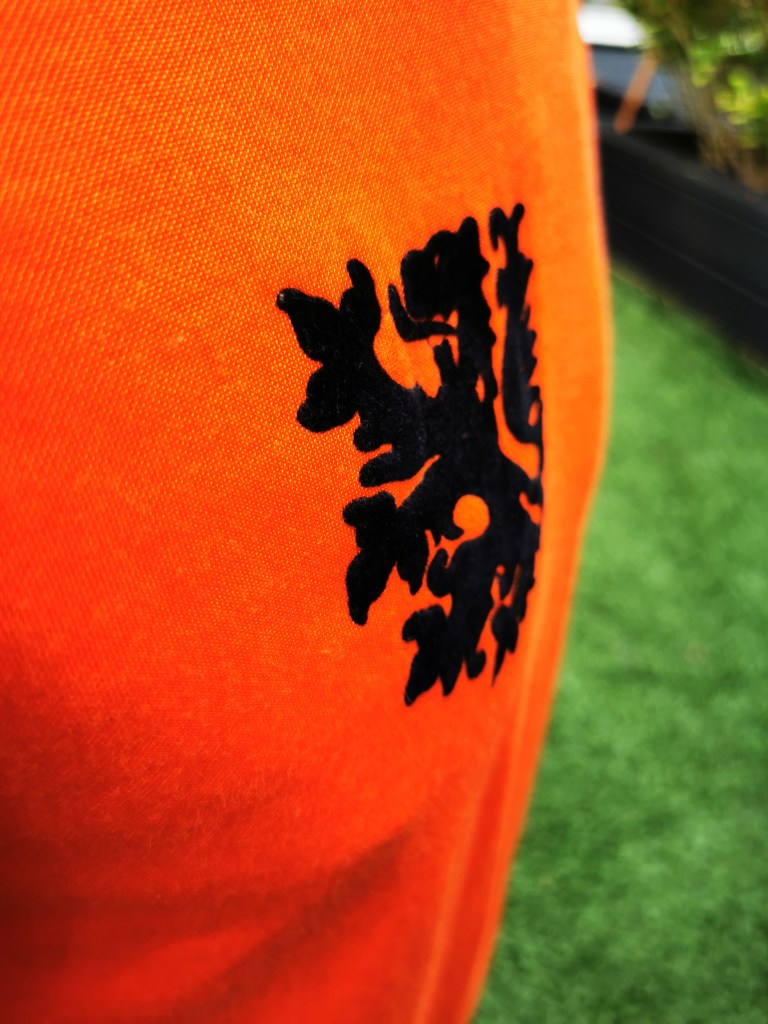
This Adidas top is identical to the jersey wore by the Netherlands in the 1976 European Championships as it features the bold black collar with the iconic Adidas three stripes running down the sleeve towards a thick black cuff. A simple top, as all jerseys only featured the badge and the players number (No trefoil on this jersey), the flying dutchmen always make their kit stand out due to their use of the colour orange which signifies the Dutch Royal Family and William I of Orange who led the country to independence back in the day. A bright kit that is instantly recognisable to everyone, fans of the Oranje should remember this top for years to come.


2 5 7 9 10 11 14 1970's 1990's 2000's Adidas Admiral Australia Black Blue Borussia Dortmund Celtic Chelsea Claret and Amber Diadora England English European Everton Germany Green International Italian Liverpool Macron Motherwell Nike Orange Pony Puma Purple Rangers Red Scotland Scottish Umbro Wales White Xara Yellow

Categories
European International Tops

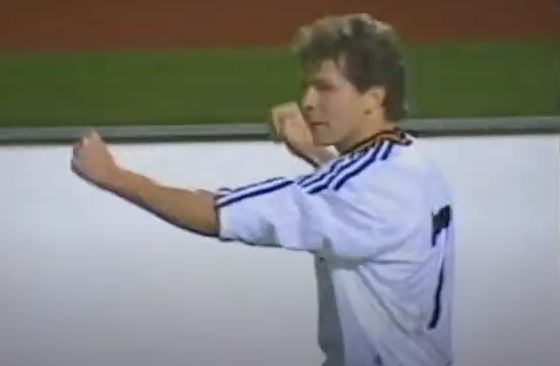
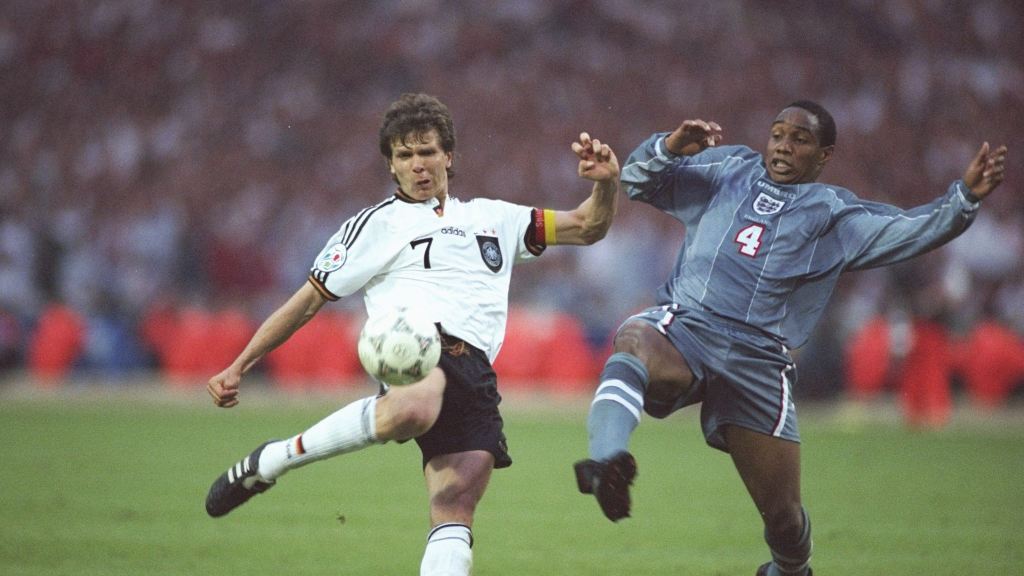
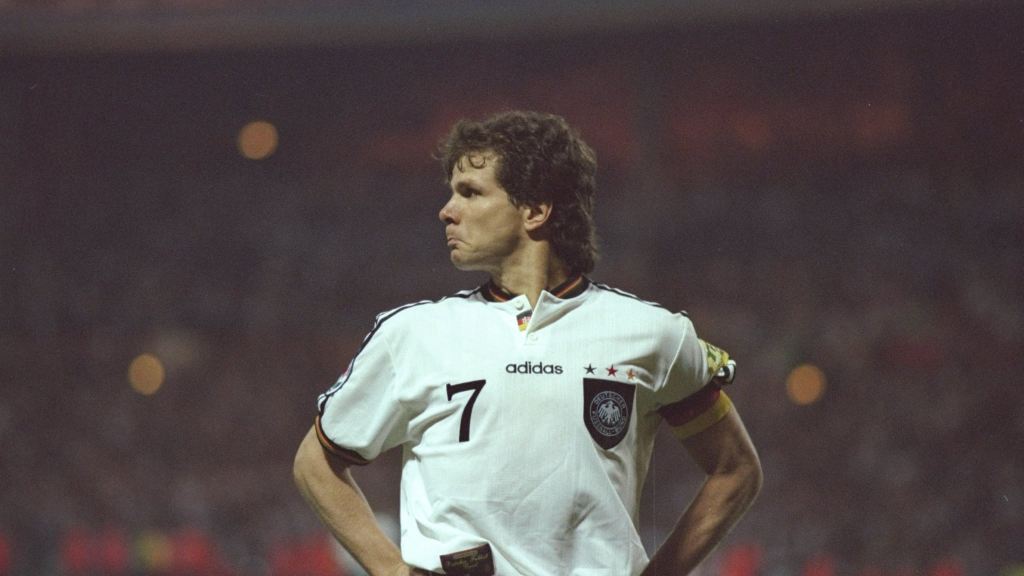
Andreas Möller – Germany 96′

A legend with Die Mannschaft, Andreas Möller has won it all from the World Cup in 1990 to the Champions League in 1997. After starting his career in 1885 with Eintracht Frankfurt, he would move to Borussia Dortmund for just over one million euros. This would be his first spell at Borussia Dortmund where he would leave after his contract expired only winning the DFB-Pokal during his two years before returning to Frankfurt. After leaving Dortmund, Möller would be called up for the Italia 90 World Cup which West Germany would go on to win in the final against Argentina. This would be the last tournament for West Germany before it would be reunified with East Germany.

After leaving Frankfurt for a second time, Möller would this time end up in Italy with a Juventus team that would consist of Roberto Baggio, Paolo Di Canio, David Platt and Antonio Conte. In his first season with The Old Lady Andreas would win the UEFA Cup, beating his previous employers, Borussia Dortmund, 3-1 at the Westfalenstadion and 3-0 at the Stadio delle Alpi with Moller scoring in the second leg.

Juventus came second in the Serie A and quarterfinalists in the UEFA Cup so with Möller being trophyless he would return to Germany with a second stint at Borussia Dortmund where he would go on to win two Bundesliga titles and a Champions League. During the 1994/95 first round of the UEFA Cup, Moller scored the only goal of the first leg when Borussia Dortmund played Motherwell which is where Dortmund would first spot future signing Paul Lambert.

Where Möller is mostly remembered however would be when he scored the decisive penalty against England in the semi-final of Euro 96 as Germany would go on to lift the trophy. Over his career, the German international would be capped eighty-five times for his country, scoring twenty-nine goals.

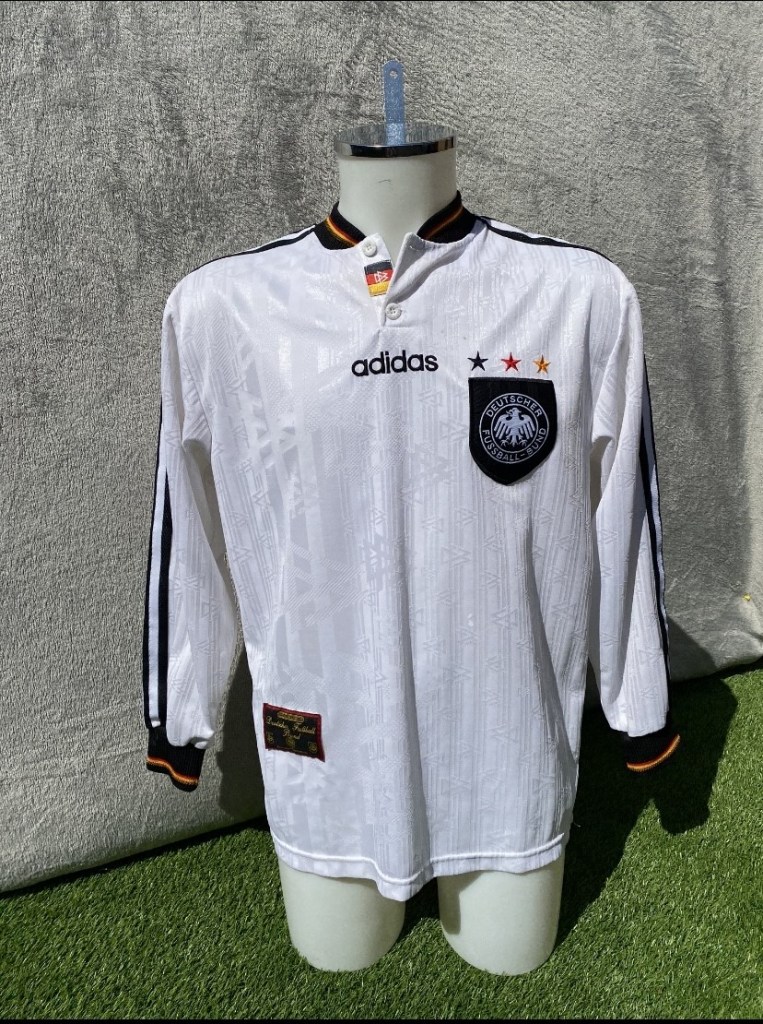
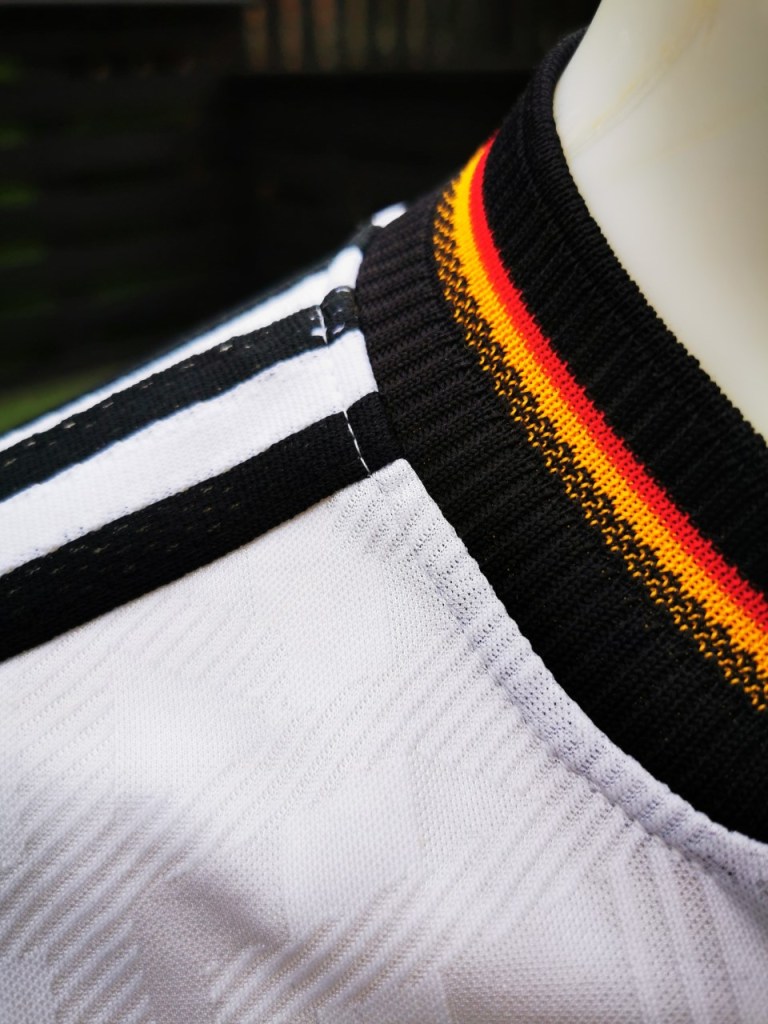
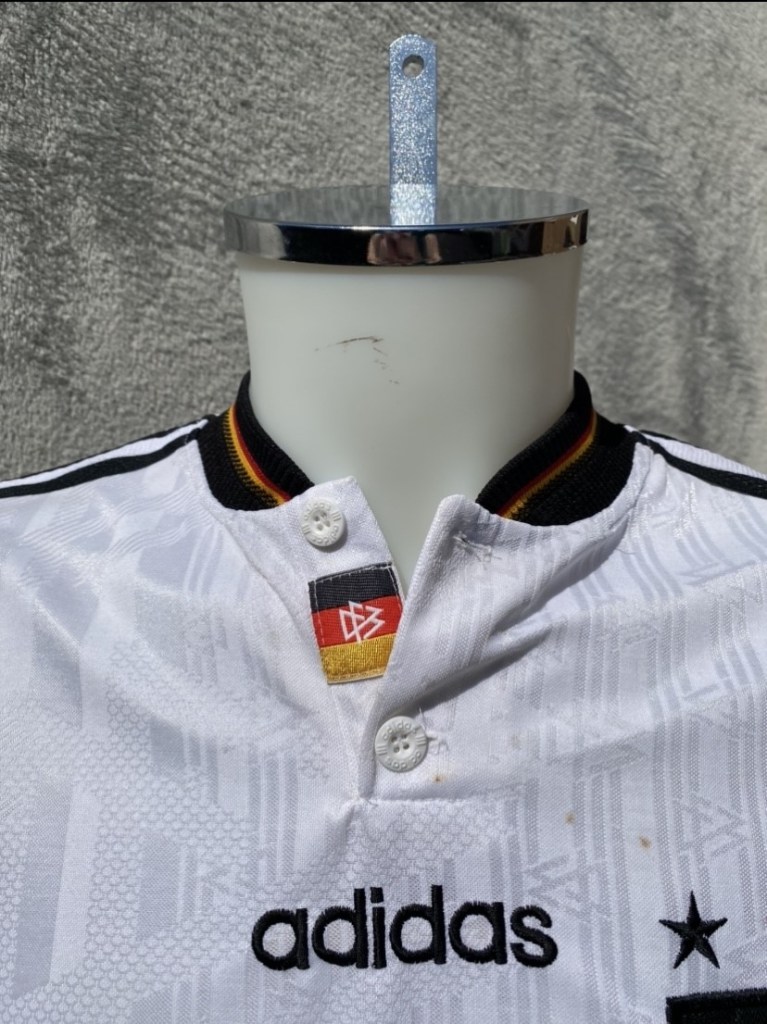
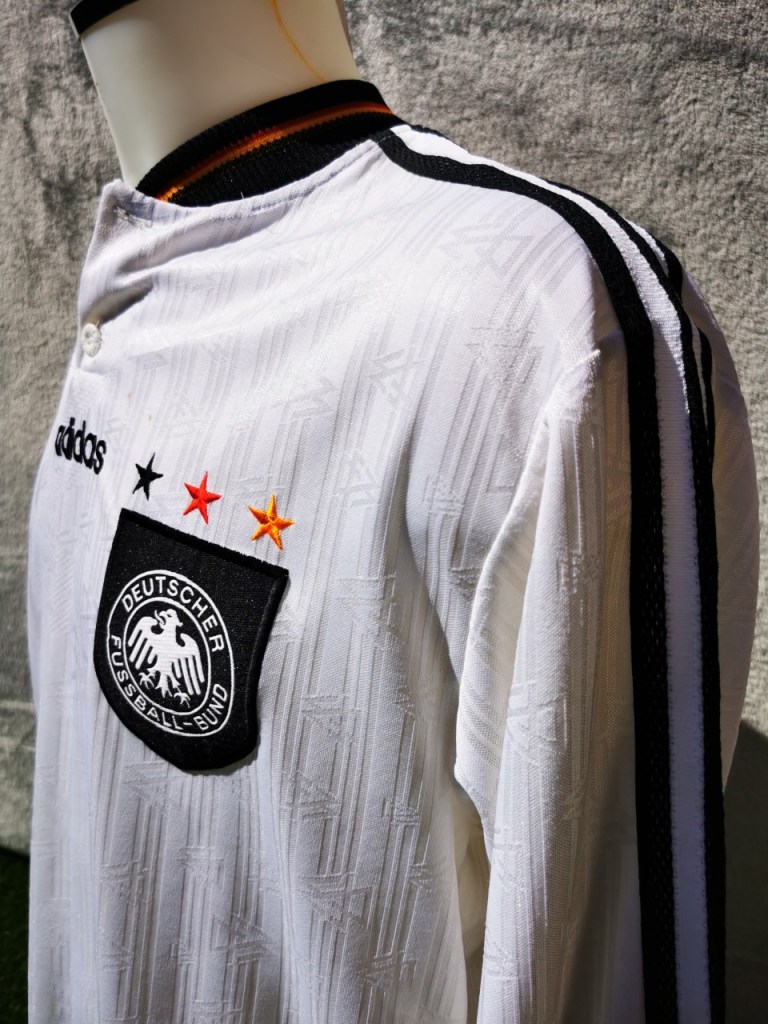
Euro 96 would be where this Germany home top would be showcased in front of the world. This top has so much detail throughout it, showing off different sizes of the German Football Association logo in vertical stripes. The collar, cuffs and stars above the badge are all in the colours of the Germany flag with a small flag in between in buttons of the shirt. The shirt would not be complete if it were not for the iconic adidas stripes running down each sleeve with the black stripes contrasting along the white shirt. The number seven is not featured on the front of this jersey as this top was used in a German friendly rather than a major tournament as shown in the the photos above.


2 5 7 9 10 11 14 1970's 1990's 2000's Adidas Admiral Australia Black Blue Borussia Dortmund Celtic Chelsea Claret and Amber Diadora England English European Everton Germany Green International Italian Liverpool Macron Motherwell Nike Orange Pony Puma Purple Rangers Red Scotland Scottish Umbro Wales White Xara Yellow

Categories
Club Tops European

Paul Lambert – Borussia Dortmund 96′

Scottish midfielder Paul Lambert grew up in Glasgow where he would sign his first professional contract with St Mirren. Lambert would go on to make over two hundred appearances for St Mirren, helping them lift the Scottish Cup in 1987 before making a switch to Motherwell for £250,000.

In his time at Fir Park, Lambert would make one hundred and three appearances over three seasons with four starts in the 94/95 UEFA Cup, after the Well finished third in the league under Alex McLeish, where they were drawn against Faroese side HB Torshavn and more notably German side Borussia Dortmund.

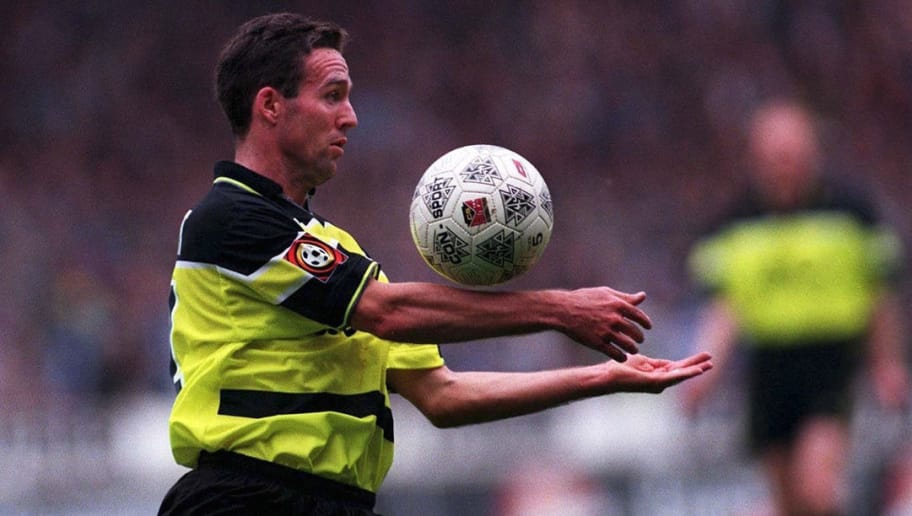
Lambert would leave Motherwell at the end of his contract in the 95/96 season and move to Borussia Dortmund which would be a massive coup for Die Borussen as they would win the UEFA Champions League, eliminating notable opponents such as Auxerre in the quarter finals, Manchester United in the semi-finals and finally Juventus in the final where Dortmund would lift the trophy after a convincing 3-1 victory.

Credit –
https://www.90min.com/posts/3929891-7-british-players-who-succeeded-when-playing-abroad

After just over a year in Germany, Lambert would return to Scotland with a two-million-pound bid coming from Celtic in November 1997. Leaving in November was no issue due to transfer windows not being made compulsory until the 2002-03 season. He would end up playing for the Glasgow side for a total of seven seasons, winning two Scottish Cups, two League Cups and four Scottish Premier League titles. Lambert would also captain his side to the 2003 UEFA Cup Final, losing to a very talented Jose Mourinho Porto team who would go on to lift the Champions League the following season.

This jersey is from Lambert’s second season at the Westfalenstadion where their only trophy would be the Inter-continental Cup, now known as the FIFA Club World Cup. A disappointing league campaignwould see Dortmund finish tenth in the Bundesliga as FC Kaiserslautern lifted their fourth top division title. They were without Lambert for most of this campaign after Lambert left for Scotland. Dortmund also lost the Super Cup to the Winner of the Cup Winners’ Cup, Barcelona, 3-1 on aggregate. They would also be beaten by the other Spanish League giants Real Madrid 2-0 in the semi-finals of the Champions League, Real Madrid would go on to lift the trophy.

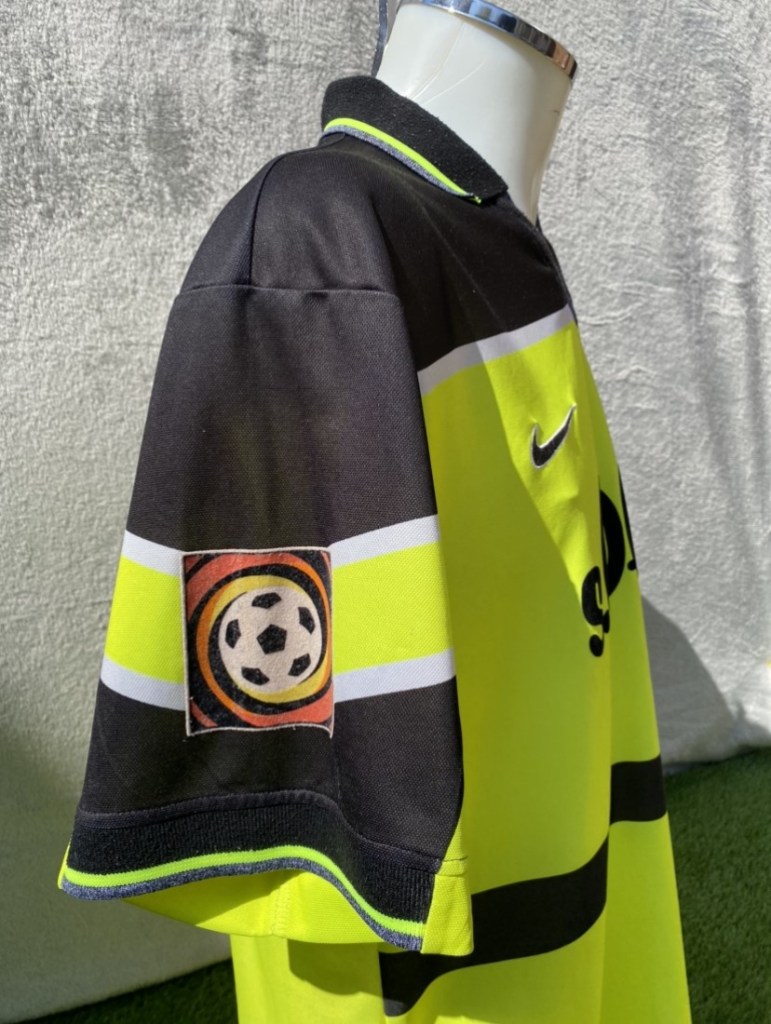
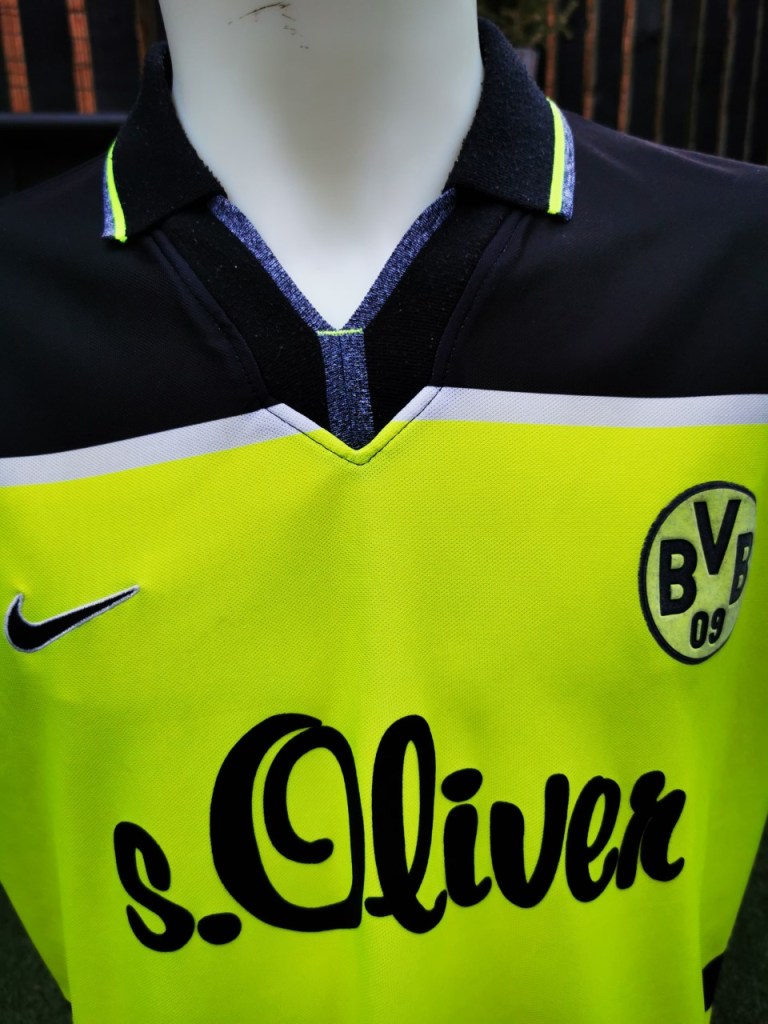
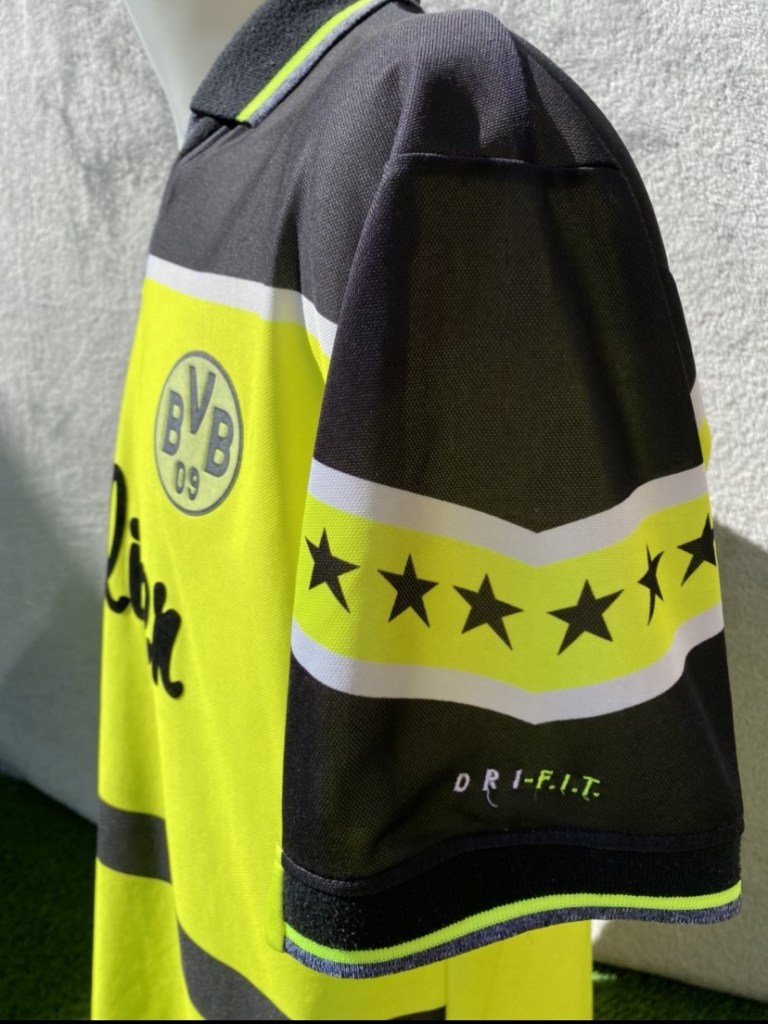
While that season may not have been a success for Borussia Dortmund, this jersey is a masterstroke from Nike, mainly due to the yellow and black that makesthis Dortmund kit so instantly recognisable but also from just how simple the kit is. Mainly down to the thin white stripe under the collar neatly separating the black and bold yellow. The black, yellow and grey trim around the collar is also copied around both sleeves with the same grey at the front of the neck forming a ‘Y’ shape keeping everything coordinated and overall a beautiful kit with a beautiful history.


2 5 7 9 10 11 14 1970's 1990's 2000's Adidas Admiral Australia Black Blue Borussia Dortmund Celtic Chelsea Claret and Amber Diadora England English European Everton Germany Green International Italian Liverpool Macron Motherwell Nike Orange Pony Puma Purple Rangers Red Scotland Scottish Umbro Wales White Xara Yellow

Categories
British International Tops

Terry Butcher – England 82′

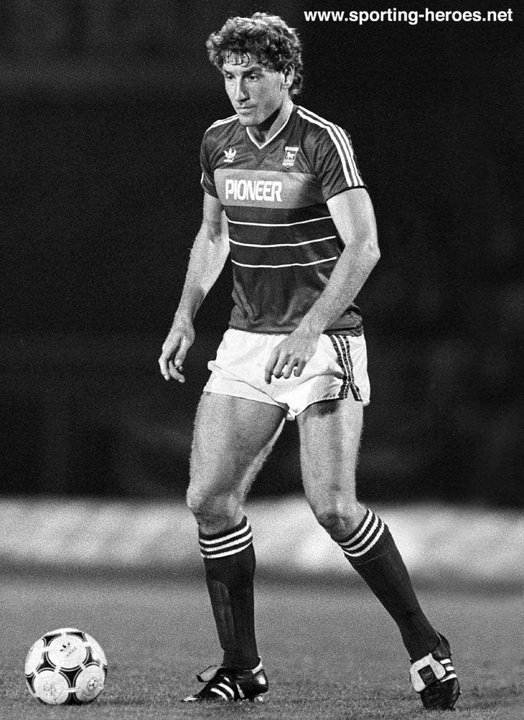
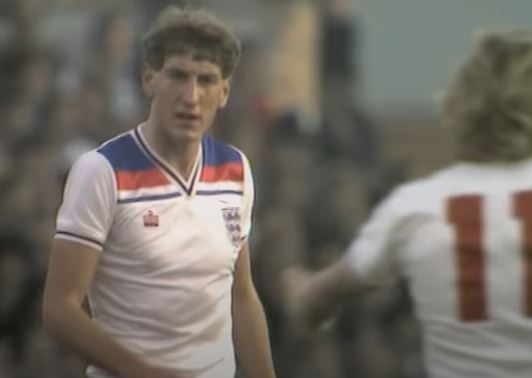
Terry Butcher began his career in 1976 as a promising centre half for Ipswich Town, with his first England call up coming on the 31st of May 1980 in a win against Australia. He would play a total of seventy-seven games for the three lions over the course of his ten-year international career, with his final England game coming against West Germany where he was in the losing side of a penalty shootout in the semi-final of the 1990 World Cup. Butcher managed to gain seventy-seven caps for England with sixty-nine of those coming under legendary manager Sir Bobby Robson and would captain England on seven outings with three coming at the 1990 World Cup.

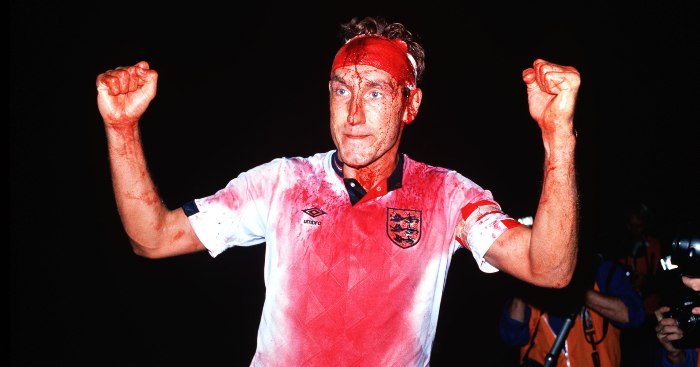
Infamous picture of Butcher covered in blood after a World Cup qualifier vs Sweeden https://www.planetfootball.com/nostalgia/terry-butcher-that-photo-a-six-month-supply-of-washing-powder/

While playing for England, Butcher played for Ipswich Town and Glasgow Rangers. During his time at Ipswich, he won the UEFA Cup in 1980/81 also under Sir Bobby Robson’s guidance. After moving to Rangers he then won three league titles in four seasons with two Scottish Cups. After the 1990 World Cup, Butcher would leave Rangers and land his first managerial role as a player manager at Coventry City where he would become the youngest manager in the football league at 32. Coventry would narrowly avoid relegation, finishing sixteenth and after playing six times that season Butcher would announce his retirement as a player. He would later be inducted into the Rangers Hall of Fame, Ipswich Town Hall of Fame and and Scottish Football Hall of Fame.

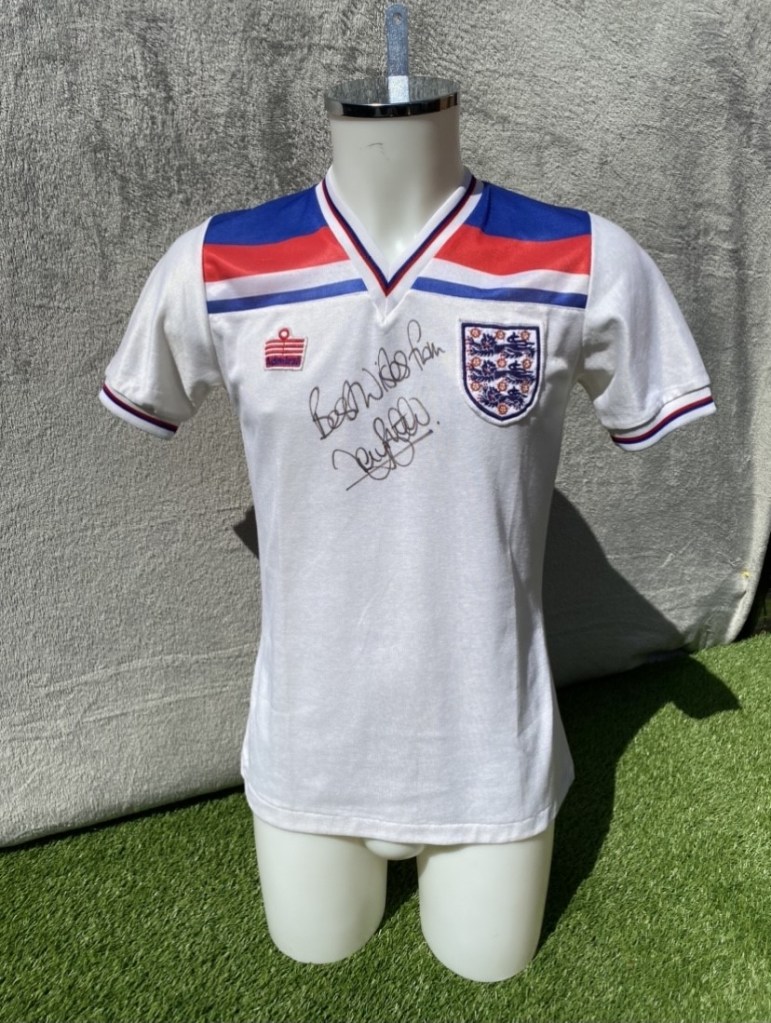
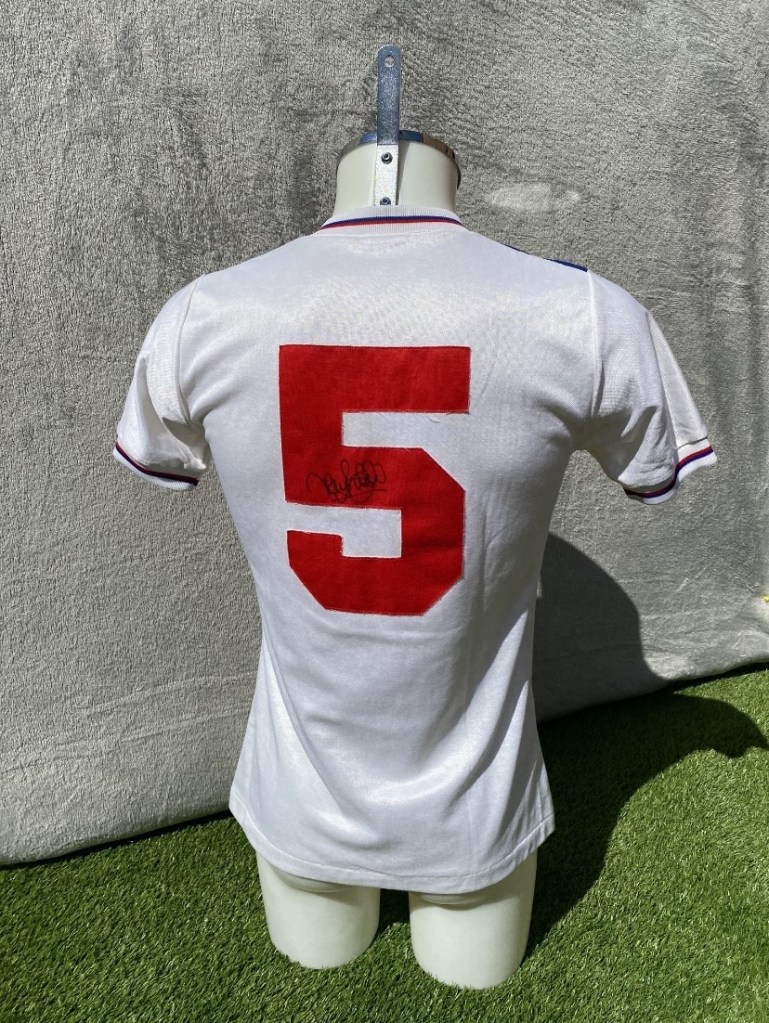
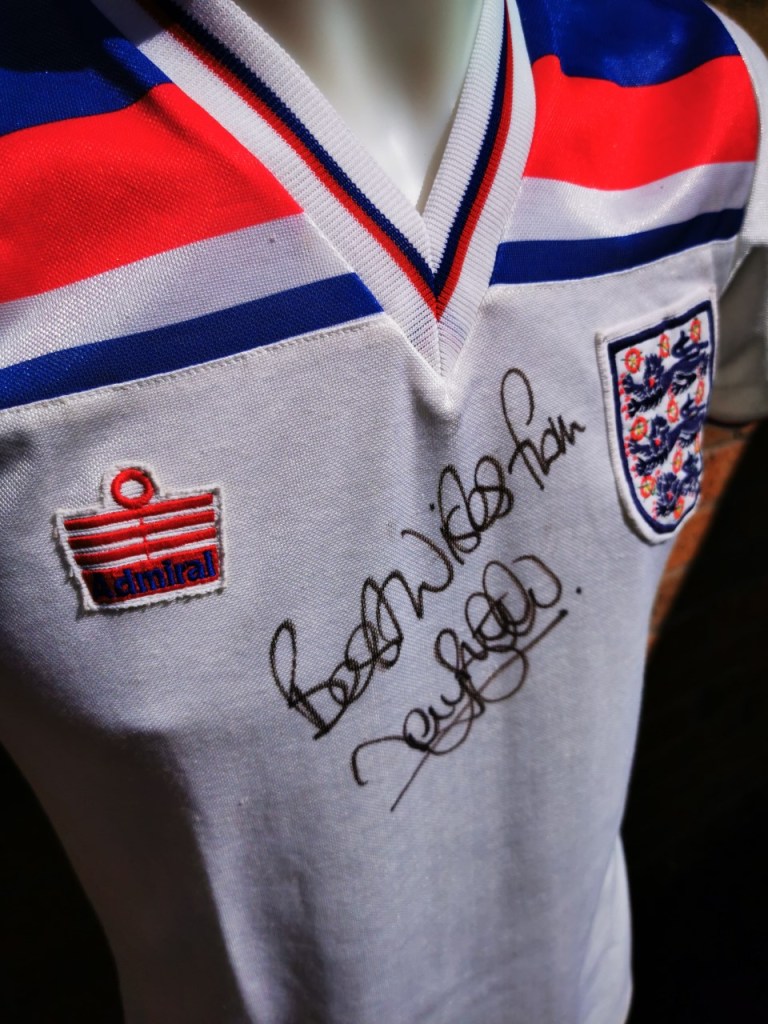
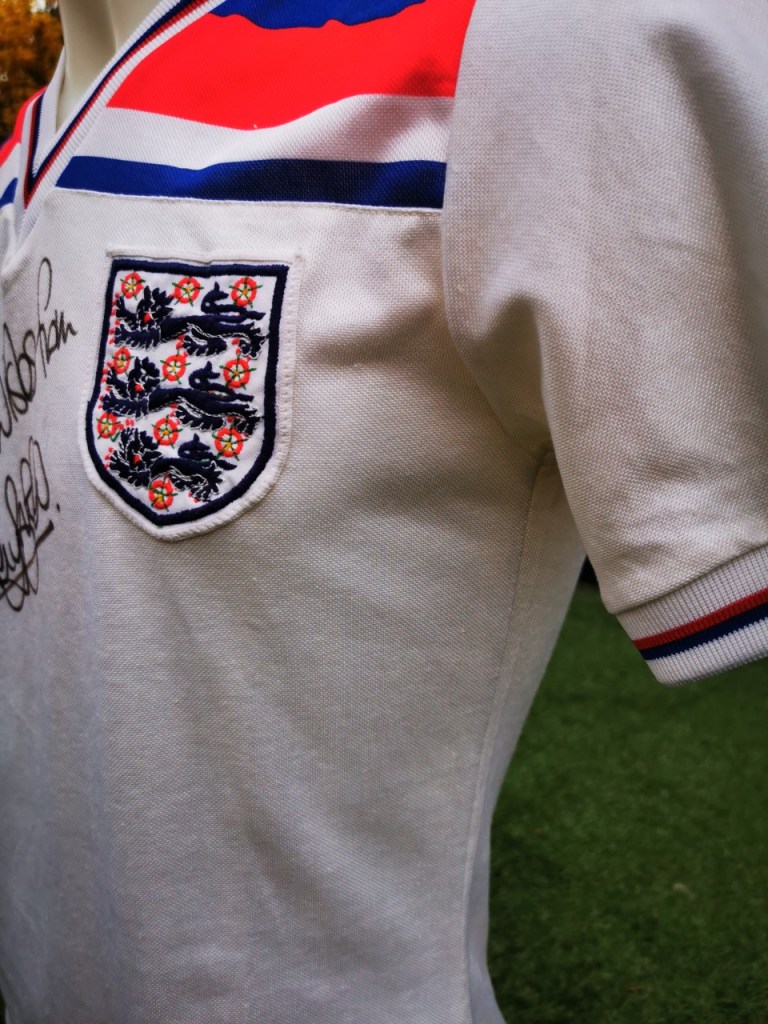
The top we have here was worn against Wales on the 27th of April in 1982, in Cardiff, where England won 1-0 after a goal from Trevor Francis in the 74th minute. Butcher managed to keep a clean sheet against a Wales team with the likes of Liverpool’s Ian Rush and former Liverpool player Joey Jones while England had stars such as Glenn Hoddle and Ray Wilkins on the pitch that day. This is one of only three occasions where Butcher would wear the number 5 jersey for England, preferring to wear the number 6 jersey once he was firmly established in the England set-up.

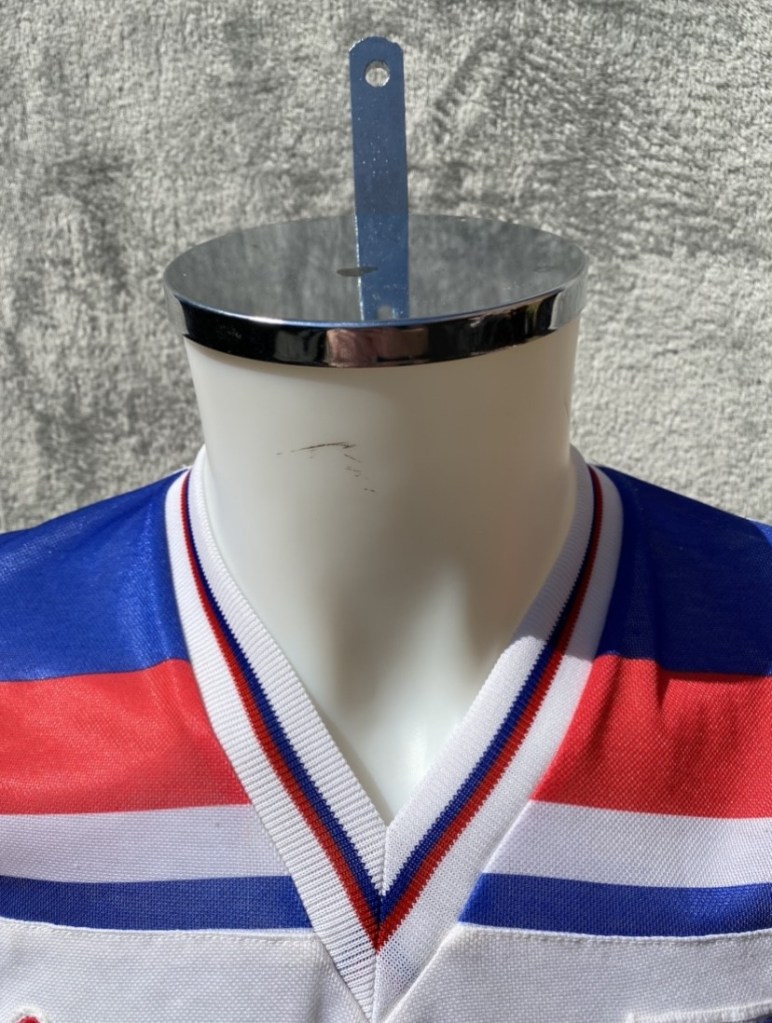
Admiral uses England’s iconic blue and red on a plain white jersey using varying sizes of the stripes on the shoulders. The collar and cuffs follow this same colour scheme but uses much thinner stripes. The large red number stitched on to the back takes up a lot of space. Names were not used regularly on the back of English jerseys until the 1992 European Championships. When you think of England and football this is one of the iconic kits that should come straight to mind.


2 5 7 9 10 11 14 1970's 1990's 2000's Adidas Admiral Australia Black Blue Borussia Dortmund Celtic Chelsea Claret and Amber Diadora England English European Everton Germany Green International Italian Liverpool Macron Motherwell Nike Orange Pony Puma Purple Rangers Red Scotland Scottish Umbro Wales White Xara Yellow